

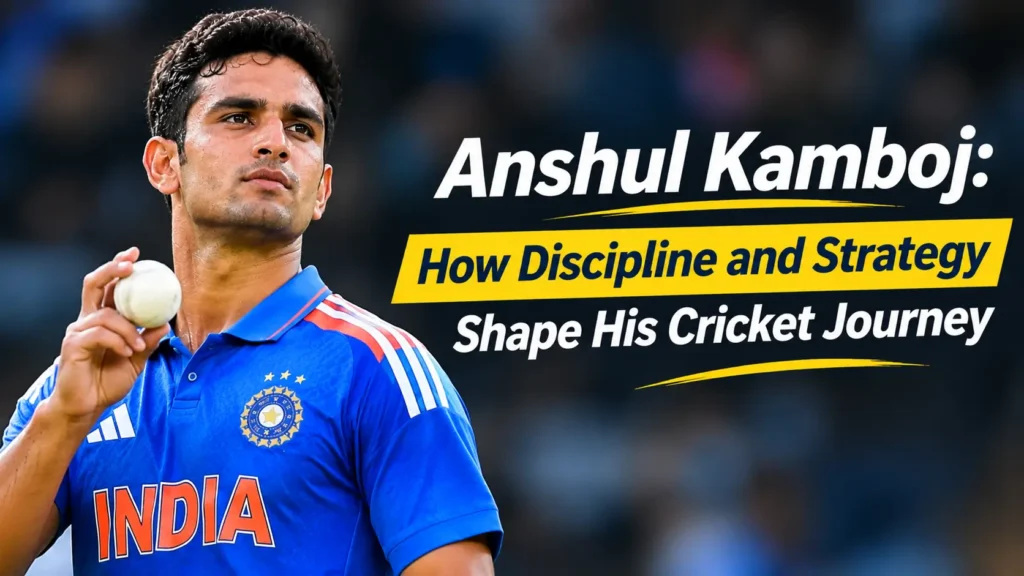
From Haryana’s domestic circuit to the international stage, his progress has been shaped by accuracy, preparation and the ability to respond after setbacks.
Anshul Kamboj’s rise is a reminder that a fast bowler does not need to rely on speed alone. Control, fitness, patience and a sound understanding of match situations are just as important. The Haryana cricketer has developed a reputation for hitting the good length repeatedly and making batters play difficult deliveries.
His journey has included important domestic milestones, an opportunity in the Indian Premier League and the challenge of international cricket. It has also included difficult debuts. Those experiences make his story more useful than a simple list of wickets: they show how a young player can build a method, test it under pressure and keep improving.
Anshul Kamboj’s Early Journey: Building a Bowler Through Discipline
Kamboj was born on 6 December 2000 in Karnal, Haryana. He began playing cricket as a child and entered a local academy after his father encouraged him to take up bowling. His childhood coach Satish Rana recalled that the initial aim was to get the young player active and involved in regular cricket practice.
His development was not an overnight story. He continued through age-group cricket before making his first-class debut for Haryana in February 2022. The domestic structure gave him time to learn how to bowl longer spells, understand different surfaces and compete against experienced batters.
Reports about his early years describe a player who spent long hours at the ground. That commitment matters for a fast bowler because a repeatable action and reliable control are built through many sessions. Fitness work, fielding practice and bowling drills all contribute to the same goal: being ready to deliver the same skill late in a spell as at the start.
Why routine matters for a fast bowler
Fast bowling places repeated stress on the body. A bowler needs strength, mobility, stamina and recovery habits. A regular routine helps make those qualities part of everyday preparation rather than something a player thinks about only before a major match.
For a developing bowler, discipline also means accepting the less exciting parts of training. Repeating a good-length delivery, improving the run-up, strengthening the core and reviewing mistakes may not attract attention. Yet these small details often decide whether a bowler can perform consistently across a season.
Accuracy and Seam Movement: The Core of His Bowling Strategy
Kamboj is a right-arm fast-medium bowler whose approach is built around hitting a challenging length. He is not described primarily as an express-pace bowler. Instead, his value comes from making batters play, using his height to extract bounce and looking for movement off the pitch.
His childhood coach told reporters that Kamboj studied videos of Glenn McGrath. The former Australia fast bowler became famous for accuracy and relentless control. Kamboj’s interest in McGrath’s methods helped him understand why a good length, repeated with discipline, can be more effective than trying to bowl every delivery at maximum speed.
That does not mean he simply copies another bowler. Conditions, pitch behaviour and the batter’s strengths all affect the best plan. The useful lesson is the principle behind the method: make the batter earn runs, keep the ball in a threatening area and avoid giving away easy scoring options.
| Bowling skill | How it helps | Strategic purpose |
|---|---|---|
| Line and length | Targets a demanding area around the off stump. | Reduces easy scoring shots and encourages mistakes. |
| Seam movement | Creates uncertainty after pitching. | Challenges the batter’s judgement and footwork. |
| Hit-the-deck bounce | Uses his height and release point. | Forces batters to adjust their shot selection. |
| Change of length | Mixes fuller and shorter deliveries when needed. | Stops batters from settling into one rhythm. |
| Control under pressure | Maintains a plan after a boundary or a missed chance. | Protects the team’s fielding plan and builds pressure. |
The Historic 10-Wicket Ranji Trophy Performance
The defining early milestone in Kamboj’s career came against Kerala in November 2024. Playing for Haryana, he took all ten wickets in Kerala’s first innings and finished with figures of 10 for 49 from 30.1 overs. His spell included nine maidens.
The achievement placed him among a very small group of bowlers. He became the third bowler to take all ten wickets in a single innings in Ranji Trophy history. It was also reported as the sixth such instance by an Indian bowler in first-class cricket. The distinction matters because the Ranji Trophy is a demanding competition in which bowlers must sustain pressure over long periods.
The figures tell part of the story. Bowling 30.1 overs requires stamina and concentration. Taking nine maiden overs shows that he did not simply wait for batters to make mistakes; he kept restricting their scoring options. The wickets came from a sustained spell rather than one short burst.
The performance also revealed a useful part of his temperament. Kamboj had taken eight wickets before the final morning and went into the next day aware that a rare opportunity was possible. He remained focused on the immediate task: taking the next wicket and completing the spell. That is a practical example of how preparation and patience can support a major result.
Learning From Glenn McGrath: Why Good Length Is a Long-Term Weapon

Kamboj’s admiration for Glenn McGrath is more than a story about a cricketing hero. It helps explain the type of bowler he has tried to become. McGrath built pressure through accuracy, consistency and an understanding of where a batter was most likely to make a mistake.
A good-length ball is difficult because it makes the batter decide whether to move forward or stay back. If the ball also moves off the seam or rises unexpectedly, the decision becomes harder. A bowler who can repeat that length can force defensive shots, edges and mistimed strokes.
For Kamboj, this approach offers a reliable base across formats. In first-class cricket, it can build pressure over long spells. In ODIs, it can limit boundary opportunities and create chances through frustration. In T20 cricket, the same control must be combined with variations and an understanding of field restrictions.
For more cricket updates, match reports and player stories, readers can also explore cricket news and updates on KhelKhabri.
Accuracy does not mean bowling the same ball every time
Good control gives a bowler the freedom to vary the plan. He can bring the ball fuller to attack the stumps, use a shorter length to test a batter’s response or change the angle from around the wicket. The key is to make each variation part of a clear plan rather than a random change.
That distinction is important for young bowlers. Variations are most effective when the stock delivery is strong. Without a reliable length, a slower ball or yorker can become predictable or inaccurate. Kamboj’s development underlines why the basics deserve so much attention.
IPL Experience: Taking Domestic Skills Into a Faster Environment
The Indian Premier League gave Kamboj exposure to a different level of competition. He made his IPL debut for Mumbai Indians in 2024 and later represented Chennai Super Kings. The tournament places young players alongside experienced international cricketers and tests their ability to execute plans under intense scrutiny.
For a fast bowler, T20 cricket brings specific challenges. Batters often look to attack from the first ball. Captains may change fields quickly, and one over can shift the momentum of a match. A bowler must understand when to defend a boundary, when to attack the stumps and when to use a variation.
Kamboj’s IPL journey has therefore been an opportunity to expand his skill set. The discipline of a good length remains useful, but the format also demands yorkers, slower deliveries, hard lengths and careful use of the crease. These skills are developed through practice and match experience, not by relying on one delivery.
| Stage | What it offered | Learning opportunity |
|---|---|---|
| Haryana domestic cricket | Long spells and repeated exposure to first-class batting. | Build stamina, accuracy and patience. |
| Mumbai Indians, 2024 | First exposure to the IPL environment. | Understand elite preparation and T20 demands. |
| Chennai Super Kings | Further opportunities in a high-pressure franchise setting. | Develop tactical awareness and role clarity. |
| India | International competition across formats. | Adapt domestic strengths to the highest level. |
International Setbacks and the Value of a Strong Response
Kamboj’s first experiences in international cricket were not straightforward. He made his Test debut against England at Old Trafford in July 2025. In England’s first innings, he took one wicket and conceded 89 runs as the home side made 669. It was a demanding introduction to Test cricket.
His ODI debut against the West Indies in October 2026 was also difficult. He conceded 82 runs without taking a wicket in nine overs. For a young bowler, such a start can create pressure because international performances are closely judged. But one match does not provide a complete picture of a player’s ability.
The response matters. Kamboj spoke about using a poor performance as motivation to do better. That mindset is important because fast bowlers cannot control every condition or every batter. They can control their preparation, their next delivery and how honestly they review their performance.
Good recovery is not simply about forgetting a bad match. It means identifying what went wrong. Was the length too full? Did the ball miss the intended line? Did the bowler change the plan too quickly? Clear answers create a better training target for the next game.
The Auckland ODI: Discipline Turned Into a Match-Winning Spell
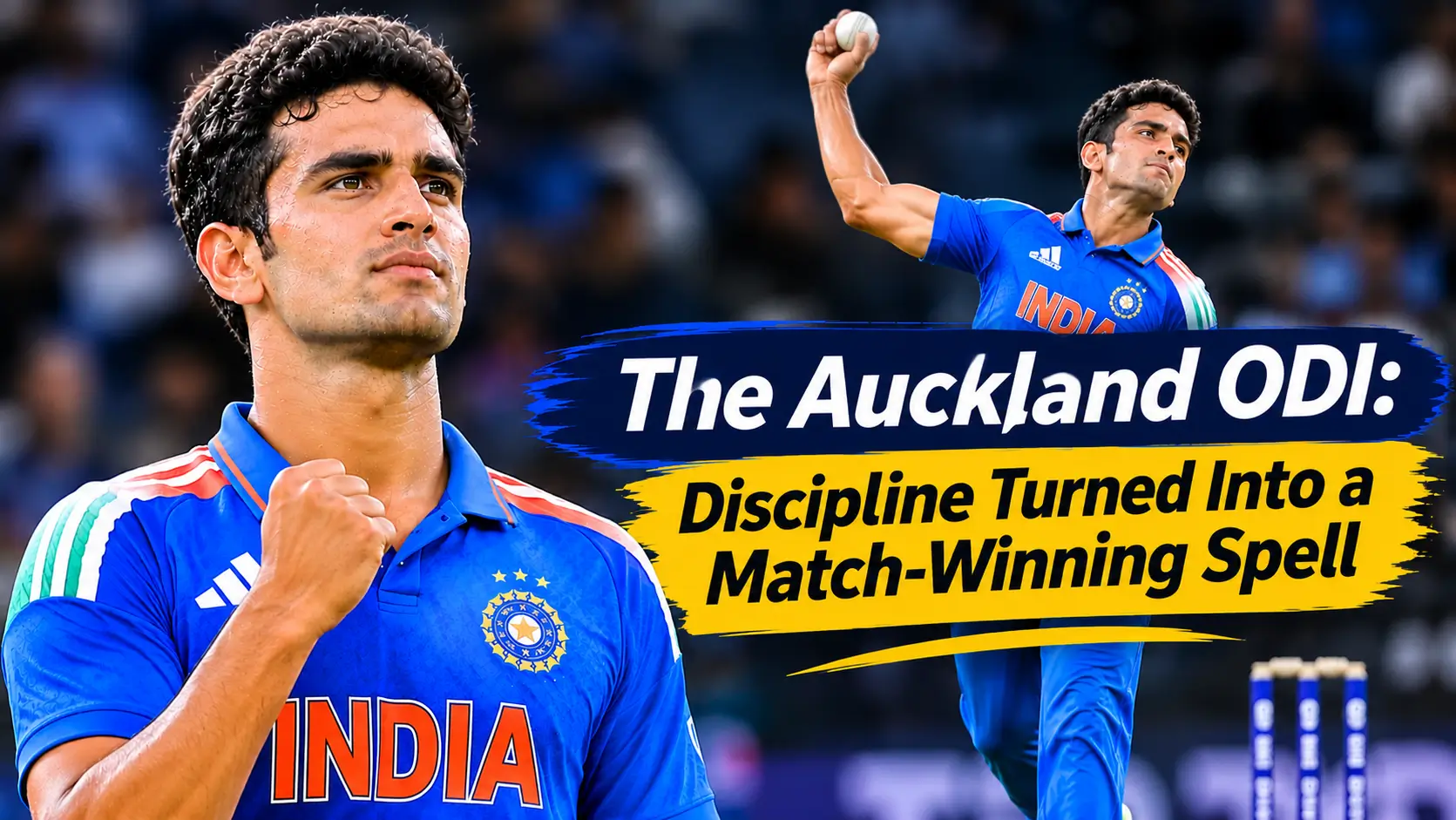
Kamboj produced a strong response in the first ODI against New Zealand at Eden Park, Auckland, on 4 November 2026. He returned figures of 2 for 22 from his full ten overs, with two maidens and 46 dot balls. He was named Player of the Match as India won the rain-affected contest.
The numbers show how effective his control was. He conceded only 22 runs in 60 legal deliveries. The dot balls reduced New Zealand’s ability to build partnerships and increased the pressure on the batters to find scoring options. His spell was not built around constant attacking deliveries; it was built around denying easy runs and waiting for opportunities.
This performance was particularly significant after the expensive ODI debut against the West Indies. It demonstrated the value of staying with a method even after a difficult outing. Rather than trying to force wickets with every ball, Kamboj focused on his areas and let pressure develop.
The match also showed why dot balls are an important part of ODI bowling. A batter who cannot rotate the strike may feel forced to attack a delivery that is not easy to hit. That can create a wicket-taking chance for the bowler or another member of the attack. Kamboj’s spell was an example of pressure built through repeated execution.
How His Strategy Changes Across Formats
A bowler cannot use exactly the same plan in every format. Test cricket rewards patience and the ability to sustain pressure over long spells. ODI cricket asks bowlers to balance wicket-taking with run control. T20 cricket demands rapid decisions because batters can attack almost every delivery.
Kamboj’s main strength—hitting a consistent length—can support all three formats. The details around that stock delivery must change. In Tests, he can build a spell around a batter’s weakness. In ODIs, he must consider the field, required run rate and partnership. In T20s, he needs a clear plan for each phase and a dependable option when batters attack.
| Format | Main bowling priority | Strategic adjustment |
|---|---|---|
| Test cricket | Build pressure and create wicket-taking chances. | Use patience, consistent lengths and sustained spells. |
| One-Day Internationals | Control scoring while taking wickets. | Use field settings, hard lengths and changes of pace carefully. |
| T20 cricket | Limit boundaries in a short period. | Plan yorkers, slower balls and match-ups by batting phase. |
Fitness, Recovery and Mental Preparation
Fast bowling is a demanding physical skill. A bowler’s run-up, delivery stride and follow-through place stress on the legs, back and shoulders. Strength and conditioning can help a player cope with that workload, while recovery gives the body time to adapt.
For a young fast bowler, fitness is not only about running faster or lifting heavier weights. It includes mobility, balance, core strength, coordination and the ability to repeat a bowling action without losing control. A sensible workload plan is also important during a long domestic season or a packed international calendar.
Mental preparation is closely connected to physical readiness. A bowler who knows the plan for a particular batter can approach the crease with more clarity. After a boundary, the next ball still needs the same attention. That ability to reset is a major part of consistency.
For further guidance on mental well-being in cricket, readers can explore the ICC mental well-being resources.
Practical habits young bowlers can take from his journey
- Set one clear technical target for each net session rather than trying to fix everything at once.
- Track line and length so progress can be measured instead of guessed.
- Build fitness gradually and take recovery seriously.
- Study batters and conditions before deciding on a bowling plan.
- Review poor performances honestly, then turn the findings into specific practice goals.
- Keep the stock delivery reliable before adding too many variations.
What Young Cricketers Can Learn From Anshul Kamboj
Kamboj’s progress offers lessons for players who want to move from local cricket into higher levels. His story does not suggest that every player needs the same routine or bowling action. It shows that development becomes more effective when effort is connected to a clear purpose.
| Lesson | What it means in practice |
|---|---|
| Discipline | Train regularly and give attention to basic skills. |
| Accuracy | Learn to repeat a challenging line and length. |
| Patience | Build pressure even when wickets do not come immediately. |
| Adaptability | Adjust the plan to the pitch, batter and format. |
| Resilience | Use setbacks to identify areas for improvement. |
| Team awareness | Understand whether the situation calls for control, attack or support. |
His Ranji Trophy achievement shows what sustained accuracy can produce over a long innings. His Auckland ODI spell shows how the same basic qualities can work in a shorter format. The circumstances were different, but the central ideas—preparation, control and patience—remained relevant.
Frequently Asked Questions
Who is Anshul Kamboj?
Anshul Kamboj is an Indian right-arm fast-medium bowler from Karnal, Haryana. He represents Haryana in domestic cricket and has played for India, Mumbai Indians and Chennai Super Kings.
What is Anshul Kamboj’s biggest Ranji Trophy achievement?
He took all ten wickets in Kerala’s first innings for Haryana in November 2024. His figures were 10 for 49 from 30.1 overs, including nine maidens.
What makes Anshul Kamboj’s bowling effective?
His main strengths include accuracy, consistent line and length, seam movement and the ability to extract bounce. He focuses on building pressure instead of depending only on pace.
Which bowler influenced Anshul Kamboj?
His childhood coach said Kamboj studied videos of former Australian fast bowler Glenn McGrath. McGrath’s accuracy and control helped shape Kamboj’s interest in hitting a good length consistently.
How did Anshul Kamboj perform in the first ODI against New Zealand in November 2026?
He took 2 wickets for 22 runs in ten overs at Eden Park on 4 November 2026. His spell included two maidens and 46 dot balls, and he was named Player of the Match.
What can young fast bowlers learn from Anshul Kamboj?
They can learn to value accuracy, fitness, patience and purposeful practice. His career also shows the importance of reviewing difficult performances and adapting to different formats.
Conclusion
Anshul Kamboj’s cricket journey highlights the value of discipline, patience and a clear bowling strategy. His progress from Haryana’s domestic circuit to the international stage has been shaped by consistent practice and a willingness to learn. His 10-wicket Ranji Trophy performance remains a major milestone in that journey.
His experience also shows that success is not built on one performance alone. Fast bowlers must understand conditions, study batters, manage their fitness and stay calm when plans do not work. Kamboj’s response to difficult moments is an important part of his development.
As his career continues, the challenge will be to maintain those habits across formats and against different opponents. For young cricketers, his story offers a useful message: trust the basics, prepare with purpose, learn from setbacks and keep working towards improvement.