


Marnus Labuschagne Test Selection is under fresh scrutiny after a difficult run of scores and a heavy series defeat in South Africa. His recent performances have placed his position in the Australian team under pressure.
Former Australia captain Greg Chappell believes the batter needs to rediscover the positive thinking that once shaped his game. Head coach Andrew McDonald, meanwhile, has said Australia will reassess Labuschagne after he failed to make the most of his opportunities.
The discussion is bigger than one poor series. It raises questions about confidence, technique, selection standards and how Australia should manage an experienced batter during a difficult period.
Marnus Labuschagne Test Selection: Why Is His Place in Doubt?
Labuschagne built his reputation through concentration, patience and a strong appetite for long innings. He became a trusted option at No. 3 because he could absorb pressure and help Australia build a platform.
His recent returns have not matched that reputation. Across the six innings of the South Africa series, he made 131 runs at an average of 21.83, with 39 his highest score.
South Africa Series Numbers Behind the Marnus Labuschagne Test Selection Debate
A quick look at his batting returns across the six innings.
Source figures stated in this article: 131 runs from six innings, at an average of 21.83, with a top score of 39. The bar uses a 200-run display scale.
The final Test in Cape Town added to the concern. Labuschagne made a duck in the first innings and four in the second as Australia lost the match by 176 runs and the series 2–1.
Those figures do not erase his earlier achievements. They do, however, give selectors a clear reason to review his position before the next Test assignment.
One repeated issue has been the failure to turn a start into a substantial score. A batter at No. 3 is expected to provide stability, especially when early wickets fall.
Labuschagne has reached the stage where a score in the thirties is no longer enough to settle the debate. Australia need him to convert those starts into innings that change the direction of a match.
The No. 3 position carries a special responsibility in Test cricket. The batter often arrives early after a new ball dismissal, or must build a partnership after the openers have provided a strong start.
That role requires more than a sound defensive technique. It also demands judgement about when to leave, when to defend and when to put pressure back on the bowling side.
Labuschagne has performed that role successfully in the past. His current challenge is to show that he can still provide the same reliability against opponents who have studied his methods.
Greg Chappell’s Advice: Rebuild the Mindset
Greg Chappell has offered a different explanation for Labuschagne’s struggles. He believes the batter may be overthinking his game and losing the natural movement that once made him successful.
Chappell has described this pattern as ‘Elite Performance Decline Syndrome’. It is his term for a phase when an experienced player can begin to lose the freedom and instinct that supported earlier success.
That phrase is Chappell’s analysis, not a medical diagnosis. His central point is that a player can become too focused on correcting problems and stop trusting the skills that brought him to the top.
Chappell’s view is that Labuschagne needs to think more like the younger batter who first established himself. That means moving positively, getting into strong positions and reacting to the ball instead of worrying about every technical detail.
Such advice is easier to give than to follow. A player under pressure knows that every innings is being judged, and that awareness can make simple decisions feel complicated.
Chappell’s argument is not that practice has no value. It is that more practice may not help if the player carries the same anxious thinking into every session.
There is a difference between preparing carefully and becoming trapped in technical thoughts. Preparation should give a batter a clear plan, while the actual innings still requires quick and instinctive decisions.
For Labuschagne, that could mean returning to a few simple batting priorities. He can focus on watching the ball, getting into balance and choosing scoring options that suit the situation.
Confidence rarely returns through one conversation or one net session. It is usually rebuilt through repeated decisions that work under match pressure.
What Has Changed in Labuschagne’s Batting?
At his best, Labuschagne was busy at the crease without appearing rushed. His footwork helped him get close to the ball, while his concentration allowed him to leave deliveries outside his scoring areas.
Recent dismissals have raised questions about his decision-making and positioning. Observers have noted that he can look tentative early in an innings and may get drawn into deliveries he once left alone.
Australia captain Pat Cummins has previously pointed towards decision-making rather than declaring a fundamental technical fault. That distinction matters because a batter can be striking the ball well in practice and still make poor choices under match pressure.
Labuschagne’s second-innings dismissal in Gqeberha was one example discussed during the tour. He attempted an attacking shot in difficult conditions while Australia needed to protect its position in the match.
That moment does not explain every dismissal. It does show why shot selection, awareness of the match situation and confidence have become part of the wider conversation.
Test cricket rewards players who understand the state of a match. A batter protecting a draw may need a different risk level from one chasing a target or trying to lift the scoring rate.
Labuschagne’s task is to recognise those moments without becoming too cautious. Positive batting does not mean attacking every ball, and patience does not mean allowing bowlers to control every over.
His best approach may sit between those extremes. He needs to keep his scoring options available while respecting the match situation and the quality of the bowling.
Opposition bowlers also adapt as they gather information. Labuschagne must keep evolving his methods, because repeating an old scoring pattern can allow teams to target the same areas.
A Reminder of the Batter Labuschagne Can Be
Labuschagne’s double century against New Zealand at the Sydney Cricket Ground in January 2020 remains a strong example of his ability. He scored 215 and showed the patience and control needed to build a major Test innings.
That innings came during a period when he was establishing himself as one of Australia’s leading batters. He played with clear intent, judged the ball well and made the most of his time at the crease.
One innings cannot provide a complete answer to a long period of poor form. It does remind readers and selectors that Labuschagne has already shown the level of performance expected from him.
His earlier success was built on more than concentration alone. He combined a strong appetite for runs with the discipline to bat for long periods and make bowlers work for every wicket.
That history should be considered, but it cannot guarantee a place in the current side. International selection is based on what a player can offer now, as well as what he has achieved before.
The challenge now is to bring those habits into the present. He does not need to copy every shot from 2020, but he does need a clear method that allows him to trust his decisions.
Andrew McDonald’s Plan for Marnus Labuschagne Test Selection
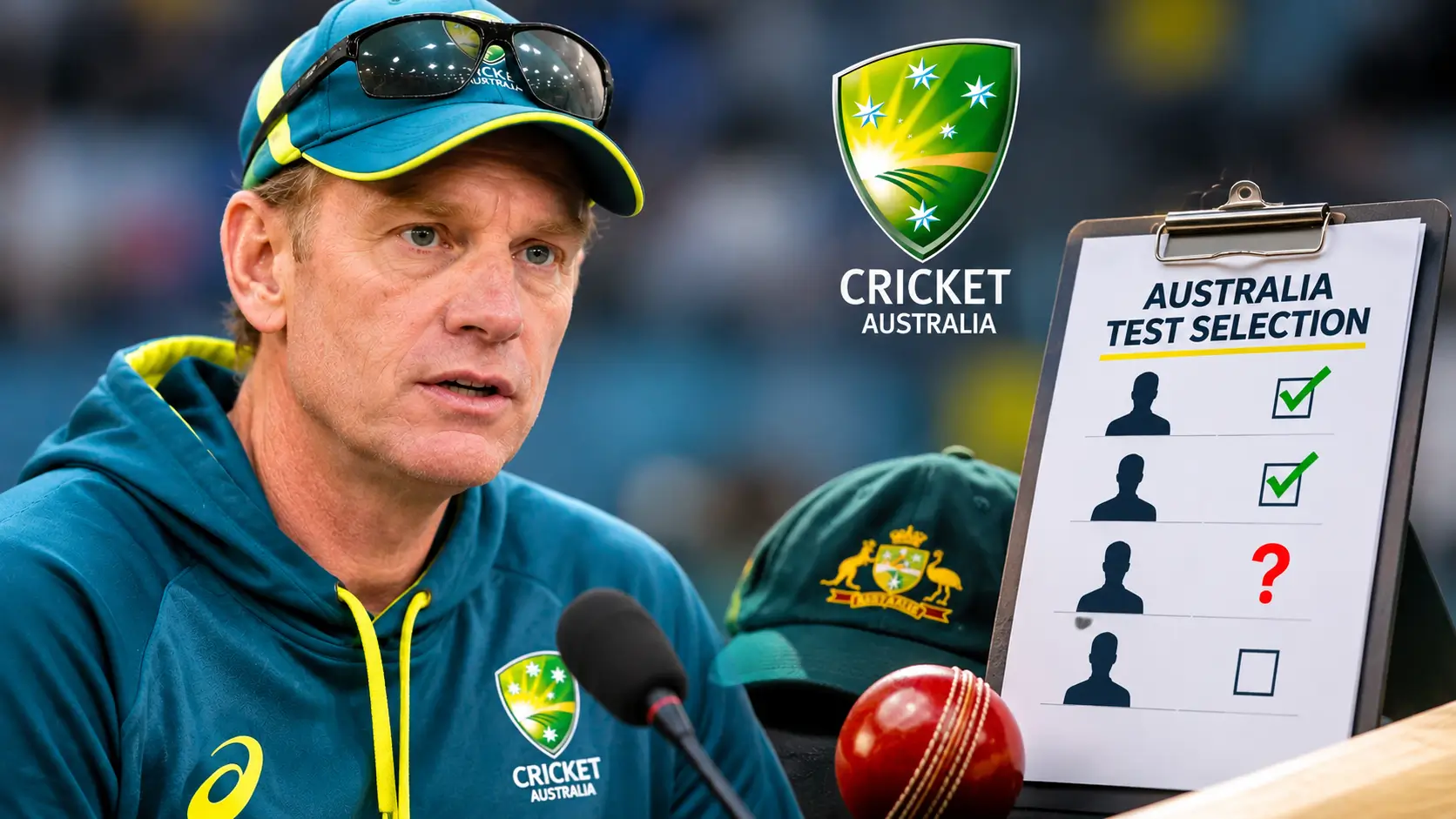
Andrew McDonald has acknowledged that Labuschagne did not take his opportunity in South Africa. The coach said Australia believed in him for the tour but would need to reassess the situation moving forward.
McDonald has also stressed that Labuschagne remains a very good cricketer. He pointed to the batter’s strong performances when he returns to state cricket, while making clear that international opportunities must be used well.
That position leaves the door open without guaranteeing selection. Labuschagne must produce performances that make it difficult for selectors to leave him out.
Australia’s decision is not simply a choice between loyalty and change. The selectors must weigh recent form, experience, role, team balance and the quality of available alternatives.
Backing an established player can bring stability. It can also become difficult to justify if the same problems continue without signs of improvement.
On the other hand, dropping a senior batter after one poor series may not solve the team’s wider batting issues. Australia need a replacement who is ready for the demands of Test cricket, not a change made only to answer public criticism.
The selectors must also consider the role each candidate can perform. A top-order batter needs to be comfortable facing the new ball, building partnerships and batting through difficult periods. For more cricket coverage, explore the Khel Khabri.
Domestic scores are useful evidence, but they are not the only measure. Selectors also assess technique, temperament, fitness, recent opportunities and how a player fits into the planned batting order.
McDonald’s comments suggest that Australia wants to review the situation rather than announce a rushed decision. The Marnus Labuschagne Test Selection debate will depend on his form, his role in the team and the options available to selectors.
What the South Africa Defeat Means for Australia
The 2–1 series loss to South Africa was a setback for more than Labuschagne. Australia struggled as a batting unit during key passages and were unable to recover from heavy defeats in the later Tests.
The result has increased scrutiny of the team’s approach and its senior players. McDonald has urged calm, while acknowledging that Australia underachieved during the series.
Josh Inglis provided a notable positive by scoring a century in the deciding Test. Cameron Green’s return from injury was another development that the coaching staff can build on.
Steve Smith missed the Cape Town Test with a neck problem. McDonald said the team had tried to make him available, but the batter was not fit to play.
Nathan Lyon’s role has also been discussed, although McDonald did not want to make an immediate decision about the experienced spinner. He indicated that Lyon remained part of the team’s planning for the next assignment.
These issues show why Australia’s review must cover the whole squad. Labuschagne’s place is an important question, but it is not the only decision facing the selectors.
A series defeat can expose problems across several departments at once. The batting order, bowling balance, injury management and fielding standards all need to be reviewed honestly.
At the same time, one poor tour should not erase the value of a player’s full record. Australia’s challenge is to identify which problems are temporary and which require a change in personnel or approach.
Australia’s Next Challenge: The New Zealand Test Series
Australia’s next major Test assignment is a four-match home series against New Zealand. The first Test is scheduled for Perth from 9 to 13 December 2026, with the series running through 8 January 2027.
The remaining matches are scheduled for Adelaide, Melbourne and Sydney. The Boxing Day Test will be played at the Melbourne Cricket Ground, while the final Test is scheduled for the Sydney Cricket Ground.
The schedule gives Australia a clear target for its preparation. It also gives Labuschagne a short window to make a strong case through domestic cricket and training.
Selectors will have to consider the conditions at each venue and the balance of the batting order. They will also need to decide whether Labuschagne remains the best option at No. 3.
His experience in Australian conditions is a point in his favour. However, selection at international level depends on current performance as well as past record.
The New Zealand series will test Australia’s top order against a strong international opponent. The team will need batters who can handle movement, maintain concentration and build partnerships across different venues.
For Labuschagne, the preparation period is a chance to work on specific areas without treating every training session as a final audition. A calm plan and meaningful runs would give him the strongest possible response to the current debate.
Readers can check the confirmed fixtures in the official Australia versus New Zealand 2026–27 Test series schedule. The four-match programme begins in Perth and concludes in Sydney.
| Test | Dates | Venue |
|---|---|---|
| 1st Test | 9–13 December 2026 | Perth Stadium, Perth |
| 2nd Test | 17–21 December 2026 | Adelaide Oval, Adelaide |
| 3rd Test | 26–30 December 2026 | Melbourne Cricket Ground, Melbourne |
| 4th Test | 4–8 January 2027 | Sydney Cricket Ground, Sydney |
Dates and venues are based on the published 2026–27 international schedule.
Can Marnus Labuschagne Save His Test Place?
<
Labuschagne still has the time and experience to respond. The most direct way to strengthen his case is to score runs and show that he can convert starts into meaningful contributions.
He may also need to simplify his approach. Chappell’s advice points towards trusting his instincts, while the coaching staff will want to see better decisions in important match situations.
Domestic cricket can provide an opportunity to rebuild confidence. Strong performances at state level would not guarantee selection, but they would give selectors fresh evidence to consider.
Australia must also be honest about the alternatives. If another batter is in better form and can fulfil the role, the selectors may have to consider a change.
The decision should be based on cricketing reasons rather than headlines. A clear plan will help both the player and the team understand what is expected next.
There is no single adjustment that guarantees a return to form. The answer may involve technical work, a clearer mental routine and a better understanding of how opponents are trying to dismiss him.
He also needs to accept that rebuilding a Test career can take time. A strong first innings would help, but sustained contributions across several matches would provide better evidence of a genuine return.
Australia’s selectors have their own responsibility in this process. They must communicate expectations clearly and choose a batting order that gives the team its best chance of winning.
Frequently Asked Questions
Why is Marnus Labuschagne’s Test place under pressure?
He scored 131 runs at an average of 21.83 across six innings in Australia’s South Africa series. His failure to convert starts into big scores has increased scrutiny of his selection.
What advice did Greg Chappell give Marnus Labuschagne?
Chappell believes Labuschagne may be overthinking his batting. He has advised him to rediscover the positive mindset and natural movement that helped him succeed earlier.
What does Elite Performance Decline Syndrome mean?
It is a phrase Chappell uses to describe a possible decline in a top player’s freedom and confidence. It is his cricketing theory, not a formal medical diagnosis.
What did Andrew McDonald say about Labuschagne’s future?
McDonald said Australia would reassess Labuschagne after the South Africa tour. He also described him as a very good cricketer who has performed strongly at state level.
When does Australia play New Zealand in the 2026–27 Test series?
The first Test is scheduled for 9–13 December 2026 in Perth. The four-Test series is scheduled to finish in Sydney from 4–8 January 2027.
Can Labuschagne return to Australia’s Test team?
He can strengthen his case with consistent runs and improved decision-making. The final call will depend on the selectors’ assessment of form, role and team balance.
Conclusion
Marnus Labuschagne’s Test future will depend on how he responds to this difficult period and rebuilds his form. Chappell has highlighted the importance of confidence, while McDonald has made clear that Australia must review its selection options.
Labuschagne has the experience and ability to fight for his place, but he needs consistent scores to support his case. Australia must also make a balanced decision that serves the team’s immediate needs and its longer-term plans.
The coming matches will give Labuschagne an opportunity to answer his critics through performances. Until then, his place in the Test side remains a key selection question for Australia.