

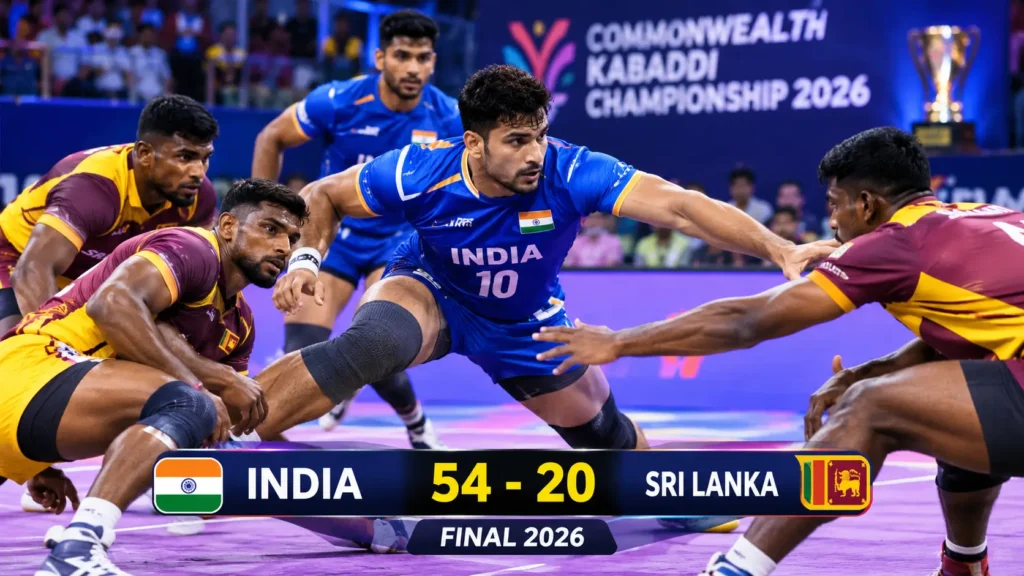
India’s men’s team won the inaugural Commonwealth Kabaddi Championship title after defeating Sri Lanka 54–20 in the final on 31 October 2026. The hosts led 30–10 at half-time, added 24 more points after the break and completed an unbeaten run of eight victories.
India produced a complete team performance in Ahmedabad. Aditya Shinde led the attack with 10 raid points, Bharat Hooda added eight raid points and Yogesh Dahiya completed a High 5 with five successful tackles from five attempts. India inflicted four all-outs and did not concede one.
54
20
India vs Sri Lanka Kabaddi Final 2026: Match Details
| Match information | Details |
|---|---|
| Tournament | Commonwealth Kabaddi Championship 2026 |
| Match | India vs Sri Lanka – Men’s Final |
| Date | Saturday, 31 October 2026 |
| Scheduled start | 9:00 PM IST |
| Venue | Veer Savarkar Sports Complex, Ahmedabad, Gujarat |
| India score | 54 points |
| Sri Lanka score | 20 points |
| Winning margin | 34 points |
| Half-time score | India 30–10 Sri Lanka |
| India captain | Surjeet Singh |
| India’s leading scorer | Aditya Shinde – 10 raid points |
The men’s final was scheduled for 9:00 PM IST on the closing day of the nine-day championship. India entered the match after beating Bangladesh in the semi-final, while Sri Lanka had edged Kenya to reach the title match.
India vs Sri Lanka Final 2026: Half-Time and Full-Time Score
| Team | First half | Second half | Total |
|---|---|---|---|
| India | 30 | 24 | 54 |
| Sri Lanka | 10 | 10 | 20 |
India won both halves. The 20-point half-time lead gave the hosts a strong platform, and they extended the margin by another 14 points in the second half. Sri Lanka scored 10 points in each half but could not build a sustained comeback.
India vs Sri Lanka Kabaddi Final: Match Highlights
India moved ahead early in the first half
India began with positive raids and disciplined defensive work. The hosts reached a 15–8 lead with 10 minutes remaining in the first half, having already inflicted an all-out. That early advantage forced Sri Lanka to chase the score and take more risks.
Sri Lanka found it difficult to score consistently against India’s defence. The Indian raiders, meanwhile, continued to find gaps and kept the scoreboard moving.
A 15–2 scoring burst took India to a 30–10 lead
India finished the first half strongly, outscoring Sri Lanka 15–2 in the closing phase. A second all-out in the final five minutes widened the gap and left India 30–10 ahead at the interval.
India’s defenders made nine successful tackles from 10 attempts in the first half. Sri Lanka managed only two successful raids from 21 attempts during that period. Those figures showed how effectively India had limited the opposition’s attacking options.
India controlled the second half
Sri Lanka needed a quick response after the break, but India did not allow the visitors to build momentum. The hosts kept scoring through raids and tackles and inflicted two more all-outs in the second half. The final all-out came in the last five minutes.
India won the second half 24–10 and closed the match at 54–20. The team maintained its structure and avoided conceding an all-out throughout the final.
Aditya Shinde Led India’s Raiding Unit
Aditya Shinde was India’s top scorer with 10 raid points from 14 raids. He completed a Super 10 and collected four bonus points as part of his performance. His scoring helped India maintain pressure on Sri Lanka and gave the team a consistent attacking option.
A Super 10 means a raider has scored at least 10 raid points in a match. Shinde reached that mark in the final and finished as India’s leading scorer.
Bharat Hooda added eight points after the break
Bharat Hooda scored eight raid points, all in the second half. He attempted seven raids and was not tackled in any of them. His contribution helped India sustain its lead after half-time and showed the depth available in the team’s raiding unit.
Pankaj Mohite and Naveen Kumar supported the attack
Pankaj Mohite added six points, while vice-captain Naveen Kumar contributed five. Their scoring meant India had several players capable of creating points instead of depending on one raider. That variety made it harder for Sri Lanka to focus its defence on a single threat.
Yogesh Dahiya Delivered a High 5
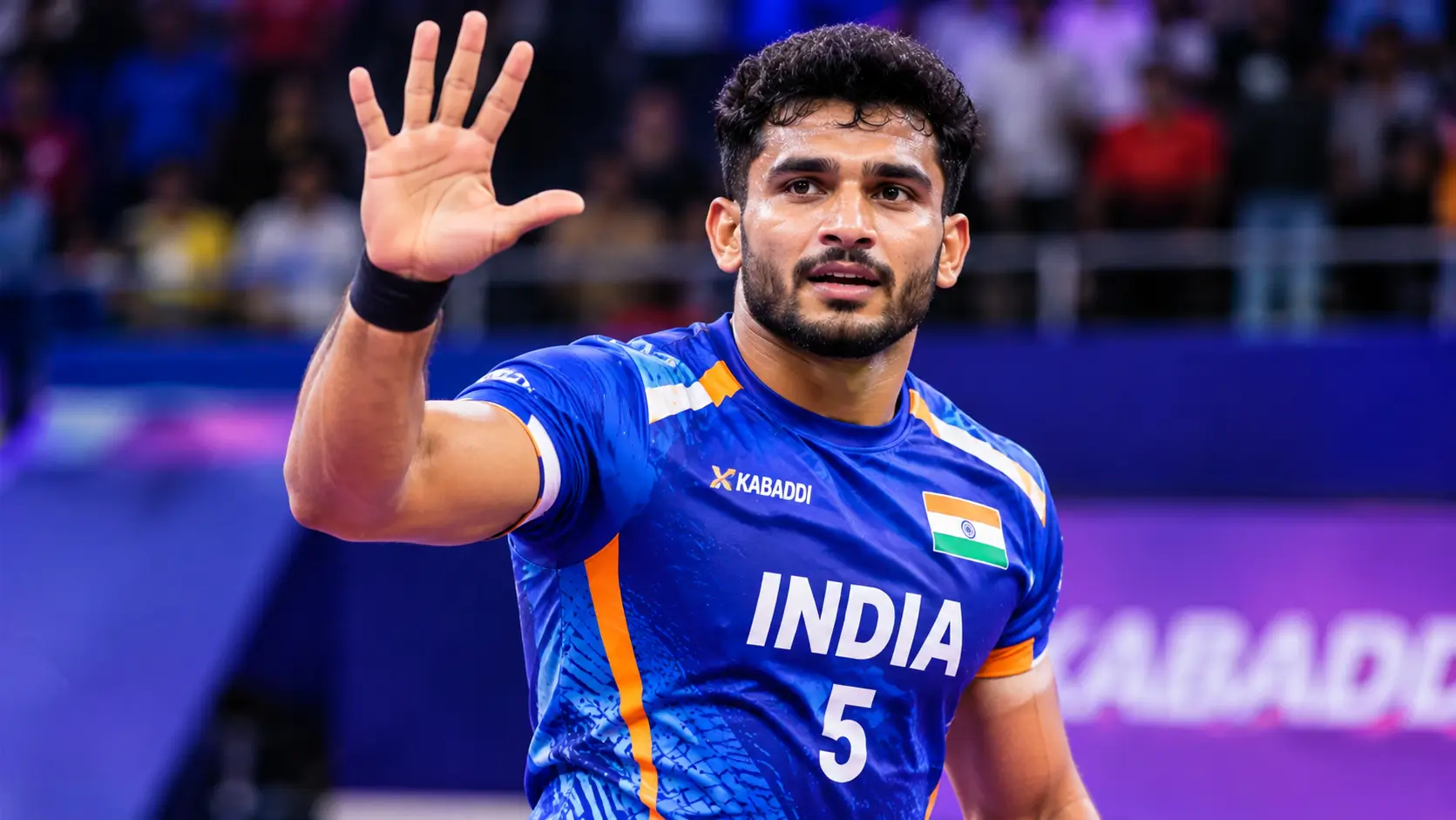
Yogesh Dahiya led India’s defence with five successful tackles from five attempts. All five tackle points came in the first half. He completed a High 5, a milestone awarded when a defender scores at least five tackle points in a match.
Captain Surjeet Singh, Shubham Shinde, Pravesh Malik and Deepak Sankar added two tackle points each. India’s defensive contribution was central to restricting Sri Lanka to 20 points. For more sports updates and match coverage, explore Khel Khabri.
India’s key player performances
| Player | Contribution |
|---|---|
| Aditya Shinde | 10 raid points; Super 10 |
| Bharat Hooda | 8 raid points, all in the second half |
| Pankaj Mohite | 6 points |
| Naveen Kumar | 5 points |
| Yogesh Dahiya | 5 tackle points; High 5 |
| Shubham Shinde | 2 tackle points |
| Surjeet Singh | 2 tackle points |
| Pravesh Malik | 2 tackle points |
| Deepak Sankar | 2 tackle points |
India vs Sri Lanka: Team Statistics
| Match statistic | India | Sri Lanka |
|---|---|---|
| Total points | 54 | 20 |
| Raid points | 30 | 11 |
| Tackle points | 14 | 9 |
| Successful raids | 24 | 7 |
| Raid attempts | 40 | 41 |
| All-outs inflicted | 4 | 0 |
| All-outs conceded | 0 | 4 |
India recorded 24 successful raids from 40 attempts, while Sri Lanka managed seven from 41. India also finished with 30 raid points and 14 tackle points. Sri Lanka collected 11 raid points and nine tackle points.
The four all-outs were another major difference. India inflicted all four and did not concede one, which helped the hosts maintain a substantial advantage throughout the match.
The final also reflected the difference between the teams’ do-or-die raid execution. Sri Lanka failed in seven of its nine do-or-die raids, which limited its chances to recover points when the pressure increased. India, by contrast, kept its scoring options open and used both successful raids and tackles to maintain the gap.
India’s performance was especially consistent across the two halves. The hosts did not rely only on the 30-point first half; they added 24 more points after the interval. That second-half output mattered because it stopped Sri Lanka from turning the break into a fresh start.
Sri Lanka’s Performance in the Men’s Final
Sri Lanka reached the final after defeating Kenya 28–24 in the second semi-final. The team had shown it could compete in a close knockout match, but India’s defensive pressure made the final a different challenge.
Maduwantha was Sri Lanka’s leading performer with six tackle points, including two Super Tackles. Ansaf and Viduranga added three points each. However, Sri Lanka’s raiders struggled to produce the same impact they had shown earlier in the tournament.
Sabihan, Milinda Chathuranga and Viduranga combined for only five raid points from 31 raids in the final. Sri Lanka also failed in seven of its nine do-or-die raids. The visitors finished with 11 raid points and nine tackle points, which was not enough to match India’s scoring output.
India’s Unbeaten Championship Campaign
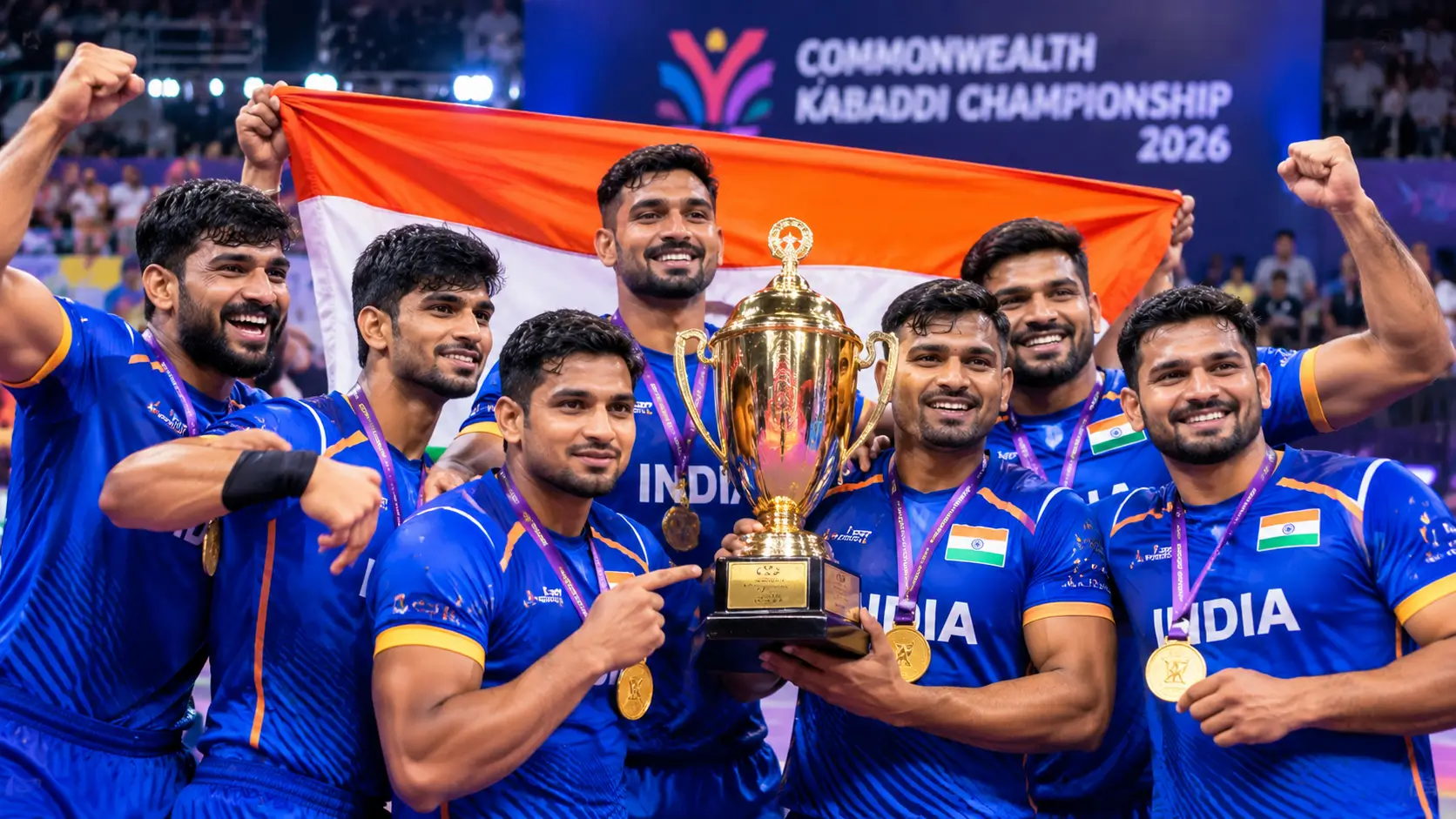
The final completed India’s unbeaten run in the men’s competition. The team topped Group A with six wins, defeated Bangladesh in the semi-final and then beat Sri Lanka in the final. India’s eight victories came against seven different opponents, with Sri Lanka faced twice.
| Date | Opponent | Stage | Score | Result |
|---|---|---|---|---|
| 23 October | England | Group A | 46–26 | India won |
| 24 October | Uganda | Group A | 44–30 | India won |
| 25 October | Malaysia | Group A | 37–23 | India won |
| 26 October | Nigeria | Group A | 50–23 | India won |
| 27 October | Tanzania | Group A | 48–20 | India won |
| 29 October | Sri Lanka | Group A | 45–24 | India won |
| 30 October | Bangladesh | Semi-final | 56–27 | India won |
| 31 October | Sri Lanka | Final | 54–20 | India won |
India scored 380 points and conceded 193 across the eight matches. No opponent scored more than 30 points against the Indian men’s team during the championship. The final victory therefore completed a campaign built on consistent scoring and strong defence.
India Men’s Kabaddi Squad for the 2026 Championship
Surjeet Singh captained the Indian men’s team, while Naveen Kumar served as vice-captain. The squad featured a mix of raiders and defenders who contributed across the group stage and knockout rounds.
| No. | Player | Team role |
|---|---|---|
| 1 | Surjeet Singh | Captain |
| 2 | Ajit Pawar | Squad member |
| 3 | Parvesh Bhainswal | Squad member |
| 4 | Shubham Shinde | Squad member |
| 5 | Yogesh Dahiya | Squad member |
| 6 | Nitesh Kumar | Squad member |
| 7 | Deepak Sankar | Squad member |
| 8 | Sachin Tanwar | Squad member |
| 9 | Naveen Kumar | Vice-captain |
| 10 | Pankaj Mohite | Squad member |
| 11 | Aditya Shinde | Squad member |
| 12 | Shivam Patare | Squad member |
| 13 | Bharat Hooda | Squad member |
| 14 | Neeraj Narwal | Squad member |
The squad list above reflects the 14 players supplied in the tournament information. Individual playing roles beyond the confirmed captaincy labels have not been assigned here to avoid guessing.
India became the first men’s champion
The 2026 edition was the inaugural Commonwealth Kabaddi Championship. By winning the final, India became the first men’s champion in the event’s history. The result also completed a double for the host nation, as India’s women’s team had beaten Uganda 35–15 earlier on the same evening.
An unbeaten campaign from the group stage to the final
India won six group matches, the semi-final and the final. The team did not lose a match during the competition and finished with 380 points scored. The title was therefore the outcome of a consistent nine-day campaign rather than a single strong performance in the final.
Contributions came from across the team
Aditya Shinde’s Super 10 attracted attention, but India’s result also depended on the contributions of Bharat Hooda, Pankaj Mohite, Naveen Kumar and the defenders. Yogesh Dahiya’s perfect five-from-five tackle record was a particularly clear example of the team’s defensive contribution. For the complete official match report, read the Pro Kabaddi report on India’s men’s final victory.
How the Final Turned in India’s Favour
The scoreline did not come from one short burst alone. India built its advantage in stages, first moving ahead during the opening half and then protecting that lead with disciplined defence. The 15–8 score with 10 minutes remaining in the first half showed that India had taken control before the interval.
The most decisive stretch came when India scored 15 points against Sri Lanka’s two. That run included the second all-out of the half and changed the match situation. Sri Lanka entered the break 20 points behind and needed a major shift in both raiding and tackling to make the final competitive again.
India avoided giving the visitors that opening. The hosts continued to score after half-time and added two more all-outs. By keeping Sri Lanka to 10 points in the second half, India prevented a comeback and finished the final with a 34-point margin.
What the Match Revealed About India’s Team Balance
More than one raider contributed
Aditya Shinde’s 10 raid points made him the leading scorer, but the final also featured contributions from Bharat Hooda, Pankaj Mohite and Naveen Kumar. Bharat’s eight points all came after the break, while Pankaj and Naveen added six and five points respectively. This spread of scoring gave India more than one route to points.
The defence converted pressure into points
India’s defenders did more than stop raids. Their successful tackles added 14 points to the team’s total, and Yogesh Dahiya’s five-from-five record stood out. The first-half defensive figures were particularly strong: India completed nine tackles from 10 attempts, while Sri Lanka made only two successful raids from 21 attempts.
All-outs increased the separation
India inflicted four all-outs across the final and conceded none. Each all-out helped the hosts add to their lead and brought the opposition players back onto the mat. The repeated pressure made it harder for Sri Lanka to settle into a rhythm or build a sustained scoring sequence.
What the Final Statistics Meant
Raid points showed India’s attacking edge
Raid points are earned when an attacking player enters the opposition half and returns safely after touching defenders, or when the raid otherwise produces a scoring outcome under kabaddi rules. India finished with 30 raid points, almost three times Sri Lanka’s 11. The difference reflected India’s ability to turn attacking opportunities into points more regularly.
Tackle points reflected defensive control
Tackle points are awarded when defenders stop an opposing raider from returning to their half. India collected 14 tackle points, while Sri Lanka earned nine. Yogesh Dahiya’s five successful tackles were especially valuable because they came without a failed attempt.
All-outs widened the gap
An all-out occurs when every player of a team is out of the court at the same time. The opposing side receives additional points, and the eliminated players return to the mat after the all-out. India inflicted four all-outs in the final and conceded none. Those moments helped the hosts build and protect their lead.
These figures explain why the final margin reached 34 points. India had the advantage in raid points, tackle points and all-outs, while Sri Lanka could not create enough scoring sequences to change the direction of the match.
Frequently Asked Questions
Who won the India vs Sri Lanka kabaddi final in 2026?
India defeated Sri Lanka 54–20 in the men’s final of the Commonwealth Kabaddi Championship 2026. The victory gave India the inaugural men’s title.
When and where was the men’s final played?
The final was played on 31 October 2026 at the Veer Savarkar Sports Complex in Ahmedabad, Gujarat. The fixture was scheduled for 9:00 PM IST.
What was the half-time score?
India led 30–10 at half-time. The hosts scored 15–2 in the closing phase of the first half to build that advantage.
Who was India’s top scorer in the final?
Aditya Shinde led India with 10 raid points from 14 raids and completed a Super 10. Bharat Hooda added eight raid points, all in the second half.
Who completed a High 5 for India?
Yogesh Dahiya completed a High 5 with five successful tackles from five attempts. All five tackle points came in the first half.
How many matches did India win in the tournament?
India won all eight of its men’s matches: six in Group A, the semi-final against Bangladesh and the final against Sri Lanka.
Conclusion
India defeated Sri Lanka 54–20 in the men’s final of the Commonwealth Kabaddi Championship 2026 and became the first men’s champions of the tournament. The hosts led 30–10 at half-time and completed the victory with a 24–10 second-half performance.
Aditya Shinde led the attack with 10 raid points, Bharat Hooda added eight and Yogesh Dahiya completed a High 5 with five successful tackles. India’s four all-outs and disciplined defence helped restrict Sri Lanka to 20 points.
The final also completed India’s unbeaten run of eight wins from eight matches. The team’s campaign in Ahmedabad ended with the inaugural men’s title and a 380–193 points record across the tournament.