

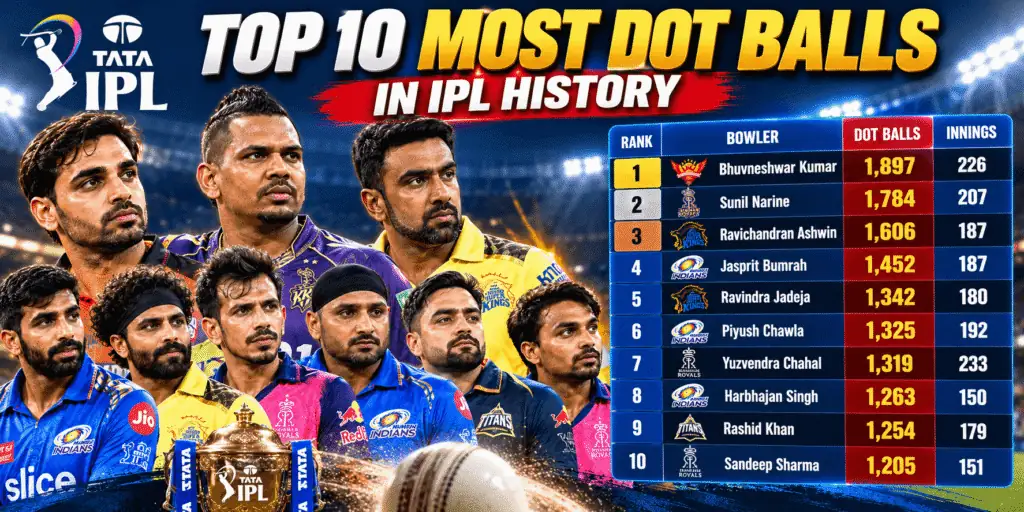
A look at the bowlers who have made scoring difficult through accuracy, variation and sustained pressure.
In T20 cricket, every delivery can change the direction of a match. A boundary creates momentum, while a wicket can turn a chase into a difficult task. A dot ball may look less dramatic, but it can quietly shape the innings. It is a delivery on which the batting side scores no runs, and repeated dot balls can make a batter feel pressure to attack.
The Indian Premier League (IPL) has featured many bowlers who control scoring through discipline and skill. Some use swing with the new ball, others rely on spin, pace changes or accurate yorkers. The supplied 2026 figures place Bhuvneshwar Kumar at the top of this list, followed by Sunil Narine and Ravichandran Ashwin.
This article presents the top ten names from those figures, explains their bowling strengths and discusses how dot balls affect T20 strategy. The totals are a snapshot of the data supplied for this article. Because active players continue to play, career numbers and rankings can change during a season. Check a current official scorecard or statistics provider before publishing these figures as a live record.
Top 10 Most Dot Balls in IPL History
The ranking below uses the career dot-ball totals provided in the article brief. Wicket totals are included as supplied, but dot balls and wickets measure different parts of a bowler’s performance. The list is best understood as a statistical snapshot rather than a claim that every figure has been independently refreshed.
| Rank | Bowler | Dot balls | Wickets listed |
|---|---|---|---|
| 1 | Bhuvneshwar Kumar | 1,897 | 226 |
| 2 | Sunil Narine | 1,784 | 207 |
| 3 | Ravichandran Ashwin | 1,606 | 187 |
| 4 | Jasprit Bumrah | 1,452 | 187 |
| 5 | Ravindra Jadeja | 1,342 | 180 |
| 6 | Piyush Chawla | 1,325 | 192 |
| 7 | Yuzvendra Chahal | 1,319 | 233 |
| 8 | Harbhajan Singh | 1,263 | 150 |
| 9 | Rashid Khan | 1,254 | 179 |
| 10 | Sandeep Sharma | 1,205 | 151 |
1. Bhuvneshwar Kumar — 1,897 Dot Balls
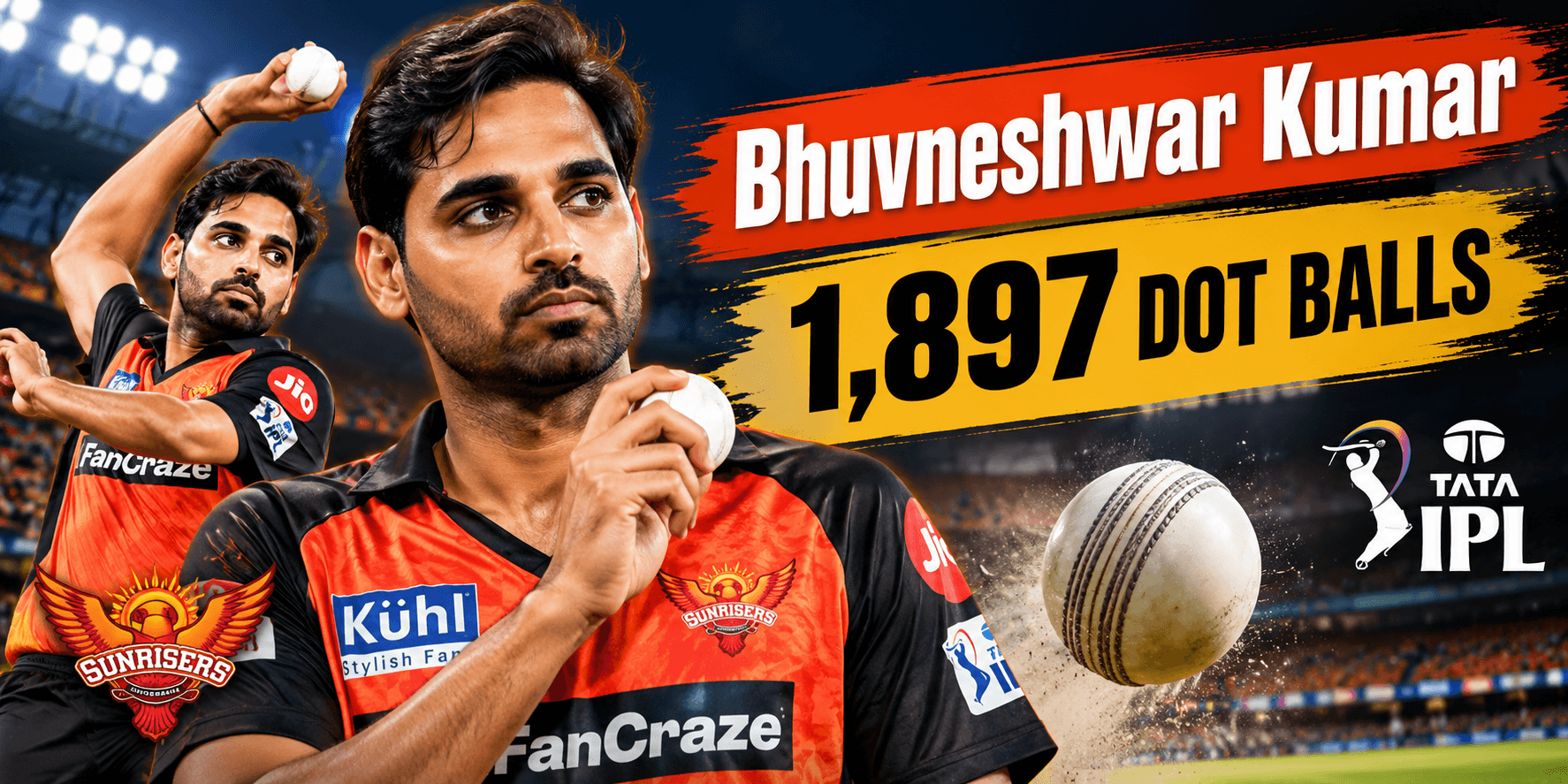
Bhuvneshwar Kumar leads the supplied all-time IPL dot-ball list with 1,897 deliveries that produced no runs. His reputation is built around control, swing and the ability to make batters play at balls they would rather leave. He often looks for movement early in an innings, then uses a disciplined line to prevent easy scoring.
For a fast bowler, a good dot ball does not always require a spectacular delivery. It may come from landing the ball in a difficult area, making the batter defend or forcing a mistimed shot. Bhuvneshwar’s strength has often been repeating that process across an over. The pressure grows when batters cannot rotate strike or find gaps.
His career total also reflects longevity. Dot-ball rankings reward bowlers who have played many seasons and delivered a large number of overs. The figure should therefore be read alongside matches played, overs bowled, economy rate and wickets. Team and wicket totals in the supplied record are listed as Royal Challengers Bengaluru and 226, respectively; verify the latest franchise and career totals before publication.
2. Sunil Narine — 1,784 Dot Balls
Sunil Narine has been a major part of Kolkata Knight Riders’ bowling identity. His compact action, quick release and variations can make it difficult for batters to judge length. He often bowls with enough pace through the air to deny batters time to step out and hit freely.
Narine’s dot-ball value is especially clear in the middle overs. Batters usually want to keep the scoreboard moving during this phase, but accurate spin can close scoring options. A batter who cannot use the sweep, drive or boundary shot safely may settle for a defensive stroke. That is often a useful outcome for the bowling side.
His record shows how spin can be effective without relying only on big turn. Pace, trajectory, angle and consistency can be just as important. The supplied figures list 1,784 dot balls and 207 wickets for Narine. His exact career totals may change as he continues to play.
3. Ravichandran Ashwin — 1,606 Dot Balls
Ravichandran Ashwin has built his IPL career through tactical awareness and a wide range of spin options. He changes pace, uses flight and adjusts his line according to the batter’s movement. Those choices can turn a scoring opportunity into a cautious defensive shot.
Ashwin’s dot balls often come from asking batters to make decisions. A ball that is slower or wider may invite a risky attack, while a flatter delivery can reduce the time available to play. When the bowler changes these patterns carefully, the batter cannot settle into one scoring method.
The supplied list gives Ashwin 1,606 dot balls and 187 wickets. His long career helps explain the high total, but the number alone cannot describe his impact. It is useful to compare his dot-ball percentage with other bowlers, because raw totals are affected by overs and matches played.
4. Jasprit Bumrah — 1,452 Dot Balls
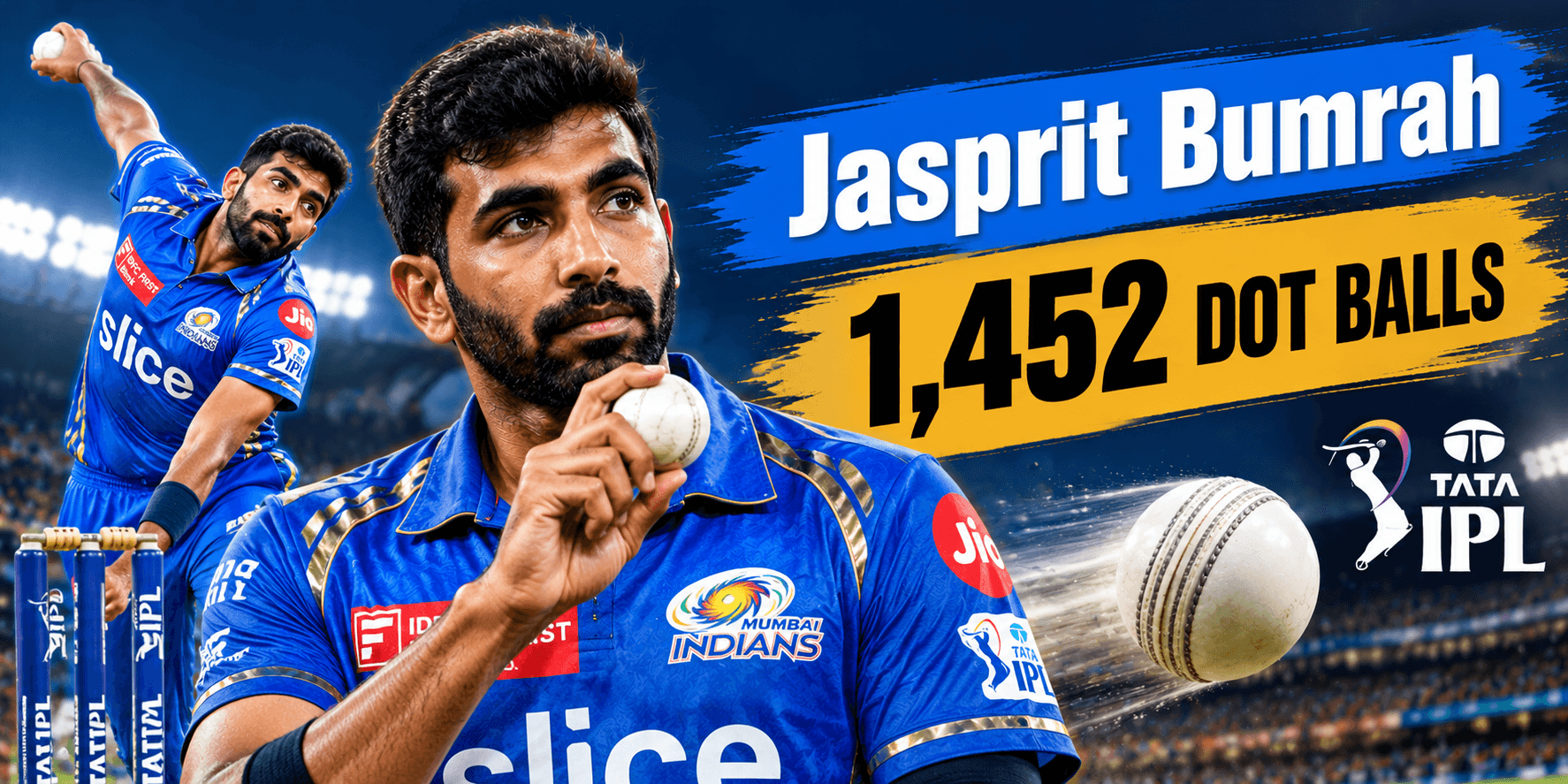
Jasprit Bumrah is known for an unusual action, sharp pace and accurate yorkers. He can challenge batters in the powerplay and return during the final overs, when a small mistake can produce a boundary. His control makes him valuable in situations where the batting team needs a quick finish.
At the death, dot balls can be particularly costly for the batting side. A batter may need to score from nearly every delivery, but Bumrah’s yorkers and slower balls make clean contact difficult. Even a single dot can increase the pressure on the next ball, especially when the required rate is high.
The supplied numbers list Bumrah with 1,452 dot balls and 187 wickets for Mumbai Indians. These figures highlight the balance between restricting runs and taking wickets. A bowler can influence a match through both outcomes, although a dot ball does not automatically mean the delivery was a wicket-taking chance.
5. Ravindra Jadeja — 1,342 Dot Balls
Ravindra Jadeja uses accurate left-arm spin, a quick release and a direct line toward the stumps. His style often gives batters limited time to move into position. He can also change pace without making his action look very different, which helps him keep scoring under control.
Jadeja’s bowling is supported by his value as an all-rounder. He contributes with the bat and in the field, so his overall match impact extends beyond dot-ball totals. In bowling terms, his best spells often involve keeping the ball in a narrow scoring zone and making batters work for singles.
The supplied list records 1,342 dot balls and 180 wickets. This is a useful reminder that a bowler’s role can be based on control as much as attacking spin. Teams may use such bowlers to slow a partnership, protect a boundary option or create pressure before a specialist wicket-taking bowler returns.
6. Piyush Chawla — 1,325 Dot Balls
Piyush Chawla has played across several IPL teams and seasons. His leg-spin and googly give him different ways to challenge a batter. A leg-spinner can make the batter reach for the ball, play against the turn or adjust to a delivery that moves in the opposite direction.
Chawla’s long career contributes to his dot-ball count. Experienced bowlers often learn how to read a batter’s preferred scoring area and respond with a safer line. They also understand when to attack the stumps and when to make the batter hit toward a longer boundary.
The supplied data lists 1,325 dot balls and 192 wickets. His figures show why career totals should be viewed in context. A bowler who has played many seasons can accumulate more dot balls than a younger player, even if the younger player has a stronger dot-ball rate per over.
7. Yuzvendra Chahal — 1,319 Dot Balls
Yuzvendra Chahal is one of the IPL’s leading leg-spinners and is known for attacking batters rather than simply defending runs. He changes flight, pace and length to make the batter commit. His googly can create uncertainty, while a well-controlled leg-break can encourage a defensive shot.
Chahal’s dot balls are important because they often arrive alongside wicket-taking intent. He may invite a batter to attack a delivery that looks hittable, then use a change in pace or turn to beat the shot. Pressure can grow when the batter has already faced several balls without scoring.
The provided record lists Chahal with 1,319 dot balls and 233 wickets. His wicket total is the highest among the ten names shown in this supplied table. Still, dot-ball totals and wicket totals should be treated separately: one describes scoreless deliveries, while the other describes dismissals.
8. Harbhajan Singh — 1,263 Dot Balls
Harbhajan Singh was a dependable off-spinner during his IPL career. He used experience, changes of pace and a steady line to restrict batters. Off-spin can be especially useful when the bowler targets the stumps and makes it difficult to score through the leg side.
His role often involved controlling the middle overs. During this phase, batters look for singles and occasional boundaries to keep the innings moving. A bowler who makes the single difficult can force a batter to attempt a larger shot. That pressure can help the team even when the over does not contain a wicket.
The supplied figures show 1,263 dot balls and 150 wickets. As a retired player, Harbhajan’s career total is not expected to grow through future IPL appearances, though databases can still update historical records or corrections. Verify the figure against a reliable statistics source before using it as a definitive record.
9. Rashid Khan — 1,254 Dot Balls
Rashid Khan is known for fast leg-spin, a sharp googly and a compact action. He gives batters little time to settle, and his pace through the air can make it hard to use the feet. His accuracy also limits the number of loose balls that can be driven for easy runs. For more cricket news and match updates, visit KhelKhabri.
Rashid’s approach combines pressure with attacking intent. He is willing to challenge batters and look for wickets, but he also understands the value of a quiet over. When a batter is forced to defend several deliveries, the next attacking shot may carry greater risk.
The provided list gives Rashid 1,254 dot balls and 179 wickets for Gujarat Titans. As an active player, he may add to those totals in future matches. His rank can change depending on the number of overs bowled by other active bowlers and how the data provider records dot balls.
10. Sandeep Sharma — 1,205 Dot Balls
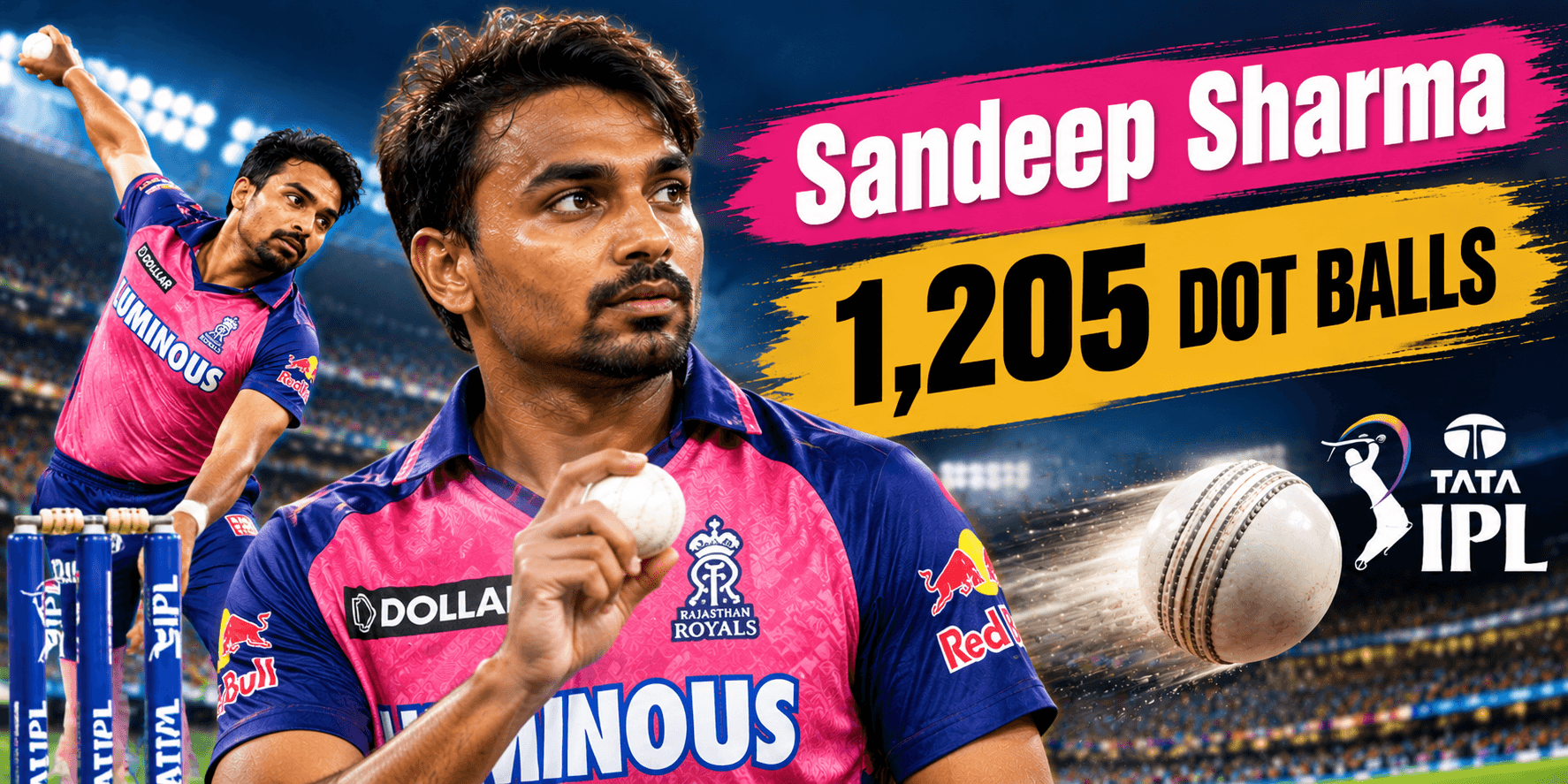
Sandeep Sharma has earned recognition for swing bowling and control, especially with the new ball. He looks to make batters play away from their body or defend a delivery that moves late. A good line can reduce the chance of a clean boundary and create opportunities for edges.
His bowling also shows how dot balls can come from a simple plan repeated well. The bowler does not need to produce a different trick every delivery. Maintaining a consistent length, using subtle changes and keeping the ball away from a batter’s strongest area can be enough to slow scoring.
The supplied data lists Sandeep with 1,205 dot balls and 151 wickets for Rajasthan Royals. These figures complete the top ten in this article. As with every player above, the team label and career numbers should be checked against the latest season’s records before publication.
Why Are Dot Balls Important in IPL Cricket?
Dot balls matter because T20 innings are built around limited deliveries. Each team has only 120 legal balls in a full innings, so a scoreless delivery reduces the number of balls available for scoring. The effect becomes stronger when the batting side is chasing a target and the required run rate is rising.
They build pressure
Several dot balls in a row can make a batter feel that the innings is falling behind schedule. The batter may start looking for a boundary rather than taking a safe single. That change in decision-making can create a chance for a mistimed shot, a catch or a run-out.
They help control the run rate
A bowler who limits easy scoring can help the fielding team defend a total. The value depends on the match situation, though. A dot ball in the final over of a close chase may be more important than one early in a large target, while a single can sometimes be a good result if it keeps a dangerous batter off strike.
They support wicket-taking plans
Dot balls and wickets often work together. A bowler may first deny boundaries, then attack when the batter tries to break the pattern. Captains can use field placements to protect likely scoring areas and encourage shots toward the boundary where fielders are waiting.
They provide another performance measure
Wickets and economy rate remain important, but dot-ball figures add detail. A bowler may take fewer wickets in a match yet still contribute by making scoring difficult. For a fair comparison, use dot-ball percentage or dot balls per over instead of raw totals alone.
How to Read Dot-Ball Records Fairly
Career dot-ball totals are useful, but they have limitations. A bowler who has played more seasons has had more opportunities to bowl. A player who regularly bowls four overs per match may build a higher total than someone used mainly as a specialist for one or two overs.
- Check the date: active players can change their totals during the season.
- Compare overs: dot balls per over help account for different workloads.
- Consider the role: powerplay, middle-over and death-over bowling involve different plans.
- Read wickets separately: dot balls do not equal wickets or prove a bowler’s overall quality.
- Use reliable scorecards: confirm totals with official match records or trusted statistical databases.
Definitions can also differ between providers. Some statistics count a legal delivery with no batter runs as a dot, while extras such as byes or leg-byes may affect how a delivery is classified. For publication, use one consistent source and explain the date of the data snapshot.
Most Dot Balls in IPL History: Key Takeaways
- Bhuvneshwar Kumar leads the supplied snapshot with 1,897 dot balls.
- Sunil Narine is listed second with 1,784 dot balls.
- Ravichandran Ashwin is third with 1,606 dot balls.
- Jasprit Bumrah and Yuzvendra Chahal are among the leading active bowlers in the table.
- Dot-ball totals can rise as active players take part in additional IPL matches.
- Dot-ball rate, overs bowled, economy and wickets provide a fuller view than one total alone.
Frequently Asked Questions
1. Who has bowled the most dot balls in IPL history?
In the figures supplied for this article, Bhuvneshwar Kumar leads with 1,897 dot balls. The ranking should be checked against an updated statistical source before publication.
2. How many dot balls has Sunil Narine bowled in the IPL?
The supplied snapshot lists Sunil Narine with 1,784 dot balls. His total may change if he plays further IPL matches or if historical data is revised.
3. Who is third on the most dot balls list?
Ravichandran Ashwin is third in the supplied table, with 1,606 dot balls.
4. What is a dot ball in cricket?
A dot ball is a delivery on which the batting team scores no runs. It is usually shown as a dot in the scorebook and can help a bowler build pressure.
5. Are dot balls and wickets the same statistic?
No. Dot balls count deliveries that produce no runs, while wickets record dismissals. A dot ball can occur without a wicket, and a wicket may also involve runs or extras.
6. Can the IPL dot-ball rankings change?
Yes. Active bowlers add to their career totals when they play. Rankings may also change when statistical providers correct or update historical records.
7. Why do dot balls matter in T20 matches?
They reduce the number of scoring opportunities and can increase pressure on batters. That pressure may lead to risky shots, but match context determines how valuable each dot ball is.
Conclusion
Dot balls are a quiet but important part of successful T20 bowling. They help bowlers control the scoring rate, challenge batters to find gaps and create pressure across an innings. The supplied 2026 snapshot places Bhuvneshwar Kumar first, with Sunil Narine and Ravichandran Ashwin following him. For official league information and match records, visit the official IPL website.
These records also show why accuracy, variation and consistent execution matter in the IPL. A dot-ball total is only one measure of performance, so it should be read alongside overs, economy rate, wickets and match role. As more matches are played, active bowlers can change the rankings. Check the latest verified statistics before presenting this list as current.
Links: KhelKhabri · Official IPL website