

Modern basketball coaching is about more than running plays. It is about helping players read the game, build repeatable skills and make better decisions under pressure. Jay Hernandez’s journey shows how individual player development can grow into a wider role on an NBA coaching staff.
Jay Hernandez has worked across several sides of basketball. He played college basketball at the University of New Hampshire and Hofstra. He competed professionally in Puerto Rico. He later built Pro Hoops, a player-training business on Long Island, before moving into the NBA with the Orlando Magic. After coaching with the Charlotte Hornets, he joined the Brooklyn Nets in 2023. The NBA Coaches Association lists him as a Brooklyn assistant coach in 2026.
What Makes Player Development So Important in Modern Basketball?
Modern basketball asks players to shoot, pass, handle the ball and defend in space. They must also make decisions under pressure. A jump shot that works in an empty gym may be harder to create when a defender closes out. A good development plan connects practice skills with game situations.
A player development coach identifies strengths, targets weaknesses and chooses exercises that address them. Ball-handling, shooting mechanics, footwork, finishing, defensive positioning and decision-making can all become part of a structured plan. The work must also fit the team’s system. Guards need to read gaps and screens; forwards must understand spacing, rebounding and rotations. Learning the basic rules of basketball is only the start. Players must apply them while the game changes around them.
From Puerto Rican Basketball Roots to Hofstra Success
Hernandez’s connection with basketball began in Puerto Rico, where he spent part of his childhood while his father, Richard, played professionally. A Charlotte Hornets feature recalls his memories of being around the court and shooting during breaks in games. His family later returned to Long Island, where he played several sports before focusing on basketball.
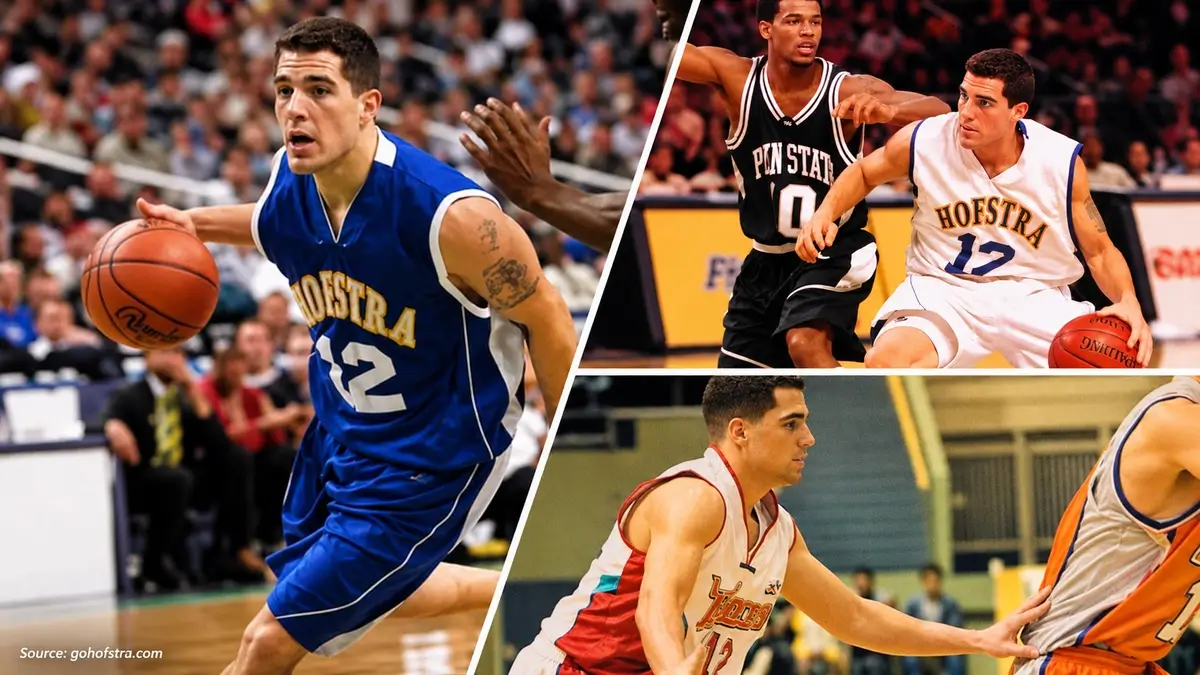
He started college at New Hampshire in 1996, then transferred to Hofstra after the 1996–97 season. He played for the Pride from 1998 to 2001, became a starter and helped the team make three consecutive postseason appearances. Hofstra reached the NCAA Tournament in both 2000 and 2001, alongside future NBA guard Speedy Claxton.
Hofstra records a 72–22 team mark during Hernandez’s years, plus 94 appearances, 88 starts, 986 points, 296 assists, 126 steals and 162 three-pointers. He earned All-Met recognition and shared the America East Co-Defensive Player of the Year award as a senior. His playing background gave him first-hand experience in defending, creating opportunities and contributing to a winning team.
Jay Hernandez’s Hofstra playing totals
| Statistic | Career total |
|---|---|
| Points | 986 |
| Assists | 296 |
| Three-pointers | 162 |
| Steals | 126 |
| Games played | 94 |
| Games started | 88 |
His time in college also shaped his approach to leadership. Hernandez has described Hofstra as a place where relationships, competition and education prepared him for later work in business and professional basketball. The experience was not only about scoring. It taught him how preparation, defense, communication and team identity affect results.
Professional Basketball in Puerto Rico and the Lessons of Competition
After college, Hernandez played professionally in Puerto Rico for the Guaynabo Mets, Aibonito Polluelos and Cayey Toritos. He described the league as physical and rich in high-level guard play. He also captained teams and applied the leadership lessons he had learned at Hofstra.
Competing in different arenas and conditions required him to adapt to changing opponents, pace and physicality. That experience gave him a wider view of the game. It later became useful context when he worked with players on footwork, defensive pressure, guard play and decision-making.
Pro Hoops: Turning Individual Training into a Development Business
Hernandez founded Pro Hoops, Inc. on Long Island in 2004. Hofstra says the business trained beginners through professional players for about a decade. His responsibilities went beyond workouts: he helped create the brand, website, curriculum and staff, and organised events and sponsorships.
Building a training business demands communication and planning. A coach must understand what a player needs, explain the plan and provide a clear path from fundamentals to harder skills. Hernandez has said that work with NBA player Tobias Harris brought his training to Orlando’s attention. Team staff observed the Long Island workouts and saw a need for specialised player-development expertise.
Anthony Bennett also described working with Hernandez in Long Island during a short pre-surgery training period, before his summer shifted mainly to rehabilitation. The detail appears in the. It shows how individual training can fit an athlete’s circumstances, not that every player followed the same programme.
How His NBA Coaching Career Developed
Hernandez entered the NBA with the Orlando Magic in 2014 as a player-development coach. In 2016, he became an assistant coach. That step widened his work from individual improvement to broader team preparation and coaching responsibilities.
| Period | Organisation | Documented role | Career significance |
|---|---|---|---|
| 2014–2016 | Orlando Magic | Player Development Coach | Focused on individual player improvement |
| 2016–2018 | Orlando Magic | Assistant Coach | Expanded into broader team coaching work |
| 2018–2023 | Charlotte Hornets | Assistant Coach | Worked within an NBA staff and player-development structure |
| 2023–present | Brooklyn Nets | Assistant Coach | Continues in NBA team coaching |
With the Charlotte Hornets, Hernandez described a broader development role. He worked on identifying areas for improvement, sharing priorities with coaches, coordinating player assignments and planning workout schedules. He also discussed sports science and player workloads. In 2021, he coached the Greensboro Swarm during the NBA G League bubble.
Hernandez joined the Brooklyn Nets as an assistant coach in 2023. The NBA Coaches Association and the league’s 2026 staff listing confirm that he remains a Nets assistant. He should therefore be described by his current NBA role, not simply as a private basketball trainer.
Jay Hernandez Basketball Coaching Style: What Defines It?
No public source shows that one drill or one system defines all of Hernandez’s work. A fair description comes from the principles he has discussed: consistency, good habits, patience and useful challenges. He has argued that athletes need room to make mistakes and that improvement takes time.
1. Challenge players without removing confidence
Players should attempt skills just beyond their comfort zone. Mistakes are part of learning. The coach helps them understand what happened, make an adjustment and try again. Challenge should be purposeful, not discouraging.
2. Build repeatable habits
Consistency matters more than one impressive workout. A balanced plan sets clear targets, allows enough repetition and includes recovery. Players should know what to practise, why it matters and how progress will be measured.
3. Connect technique with game decisions
Ball-handling drills build control, but games require players to read defenders and space. Shooting work must include balance, footwork and shot selection. Defensive practice should teach positioning and communication. Skills matter most when they transfer to competition.
His experience building a curriculum and coordinating NBA development highlights communication. Players need feedback they can use, while coaches must share priorities so individual training supports the team’s style of play.
Why His Career Matters to the Wider Basketball Coaching Community
Hernandez’s pathway was not direct. It included college basketball, international competition, business experience, private training and NBA roles. Playing gave him a feel for competition; Pro Hoops developed his programme-building and communication skills; NBA work expanded his role into team preparation.
His story also reflects the influence of Puerto Rican basketball, his father’s playing career and the Hofstra community. It shows young athletes and future coaches that several routes can lead into the professional game. For another example of how elite performance shapes basketball history, read KhelKhabri’s Michael Jordan biography, career records and legacy. The lesson is not that every player can repeat a superstar’s career, but that preparation, habits and feedback support high-level performance.
Frequently Asked Questions
Who is Jay Hernandez in basketball?
Jay Hernandez is an American basketball coach and former player. As of 2026, he is listed as an assistant coach for the Brooklyn Nets. He previously worked with the Orlando Magic and Charlotte Hornets.
Was Jay Hernandez a basketball player before coaching?
Yes. He played college basketball at the University of New Hampshire and Hofstra, then competed professionally in Puerto Rico before moving into player training and NBA coaching.
What was Pro Hoops?
Pro Hoops, Inc. was a Long Island basketball training business Hernandez founded in 2004. It worked with players at different levels and operated for about ten years.
Which NBA teams has Jay Hernandez coached?
His NBA coaching career includes the Orlando Magic from 2014 to 2018, the Charlotte Hornets from 2018 to 2023 and the Brooklyn Nets from 2023 onward. His Orlando role began in player development before expanding to assistant coach.
What can young players learn from his coaching philosophy?
They can focus on consistent practice, accepting mistakes, building good habits and applying skills in real game situations. Improvement takes time and should be guided by clear feedback.
Where can fans find Jay Hernandez’s training videos?
His CoachTube profile lists basketball instruction courses covering areas such as scoring moves, pull-ups, shooting and point-guard development. Course availability may change.
Conclusion
Jay Hernandez’s career shows how individual basketball training can become a foundation for broader coaching responsibilities. His work at Pro Hoops helped him develop a system for improving players. His time with Orlando, Charlotte and Brooklyn added the demands of team coaching, preparation and communication. His path does not suggest a quick formula for success. It highlights a more durable idea: skilled coaches help athletes improve through clear plans, meaningful challenges, useful feedback and consistent work.