

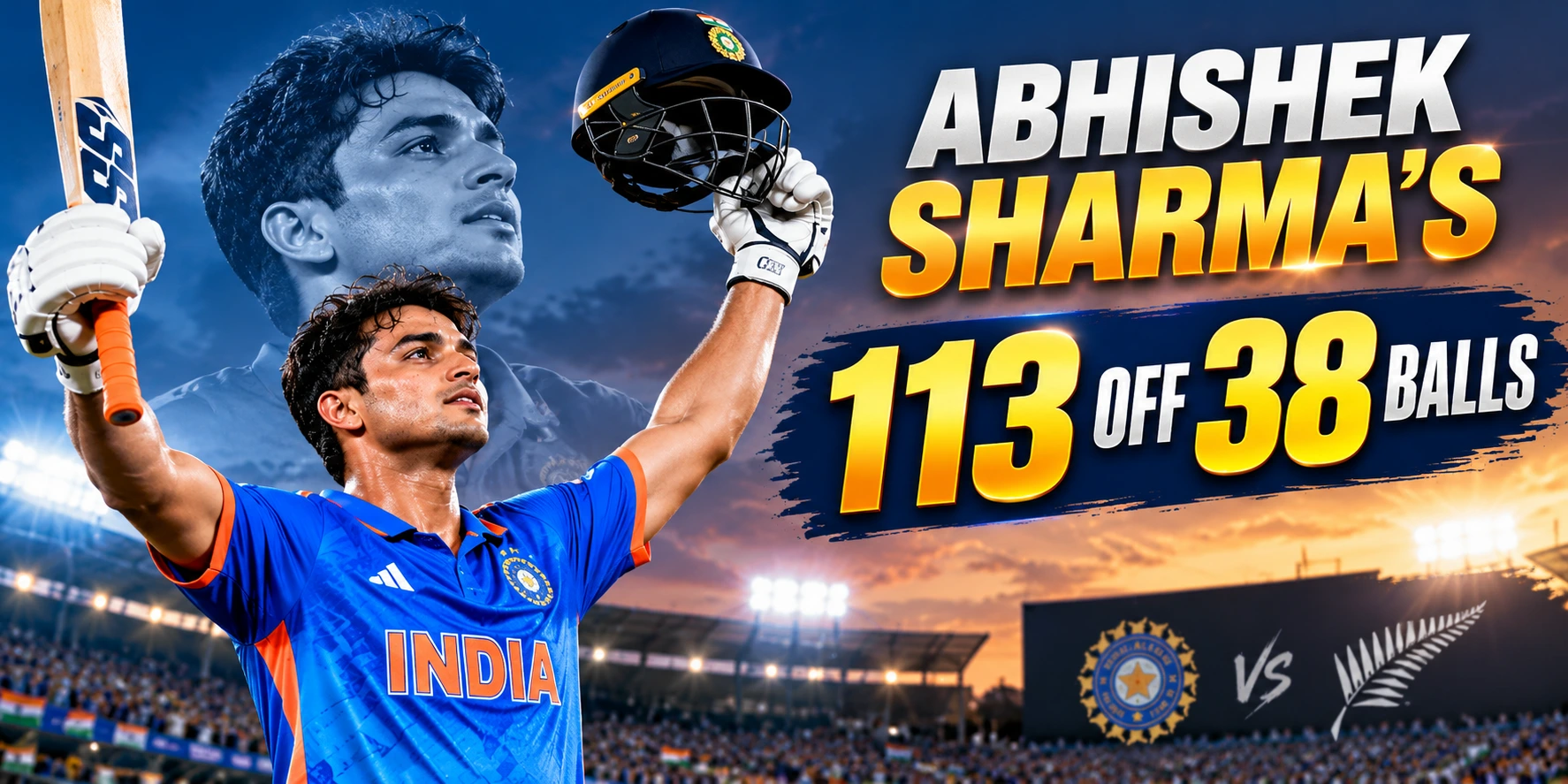
Abhishek Sharma smashed 113 from 38 balls in the third T20I between New Zealand and India in Wellington on 27 October 2026, according to the available match-result summaries. India chased New Zealand’s 198/3 by reaching 199/4 in 13.2 overs and won by six wickets, with 40 balls remaining. The innings was the defining performance of a rapid chase and earned Abhishek the Player of the Match award.
Match Details: New Zealand vs India, 3rd T20I
The third match of the five-game T20I series took place in Wellington on Tuesday, 27 October 2026. New Zealand batted first and posted 198/3 from 20 overs. India’s chase was led by Abhishek’s 113 from 38 balls and Vaibhav Sooryavanshi’s 45 from 19 deliveries. India reached the target in 13.2 overs, winning by six wickets and moving 3–0 ahead in the series according to the available match summary. For ball-by-ball coverage, see the ESPNcricinfo live match blog.
| Match detail | Match information |
|---|---|
| Fixture | New Zealand vs India, 3rd T20I |
| Series | India in New Zealand, 2026–27 |
| Date | 27 October 2026 |
| Venue | Hnry Stadium, Wellington (also referred to as Wellington Regional Stadium in some summaries) |
| New Zealand innings | 198/3 in 20 overs |
| India innings | 199/4 in 13.2 overs |
| Result | India won by 6 wickets, with 40 balls remaining |
| Player of the Match | Abhishek Sharma |
| Series position | India led the five-match series 3–0 after this match, according to available match summaries |
Abhishek Sharma’s 113 off 38 Balls
Abhishek’s innings of 113 from 38 balls works out to a strike rate of 297.37. In practical terms, he scored almost three runs per ball faced, putting India in a commanding position during the chase. His innings also meant India did not need to bat the full 20 overs to pass New Zealand’s total.
| Batting statistic | Figure |
|---|---|
| Runs | 113 |
| Balls faced | 38 |
| Calculated strike rate | 297.37 |
| Opponent | New Zealand |
| Match | 3rd T20I, Wellington, 27 October 2026 |
| Match award | Player of the Match, according to available summaries |
| Fours and sixes | Not independently confirmed in the accessible text scorecard; check the live scorecard before publishing exact counts |
| Dismissal | Not independently confirmed in the accessible text scorecard |
The strike rate is calculated as runs divided by balls faced, multiplied by 100: 113 ÷ 38 × 100 = 297.37. This calculation is mathematical and does not depend on how many of the runs came from boundaries. Exact fours, sixes and dismissal details should be copied from the complete scorecard once it is accessible, rather than inferred from a cropped image.
India’s Chase: Scorecard Highlights
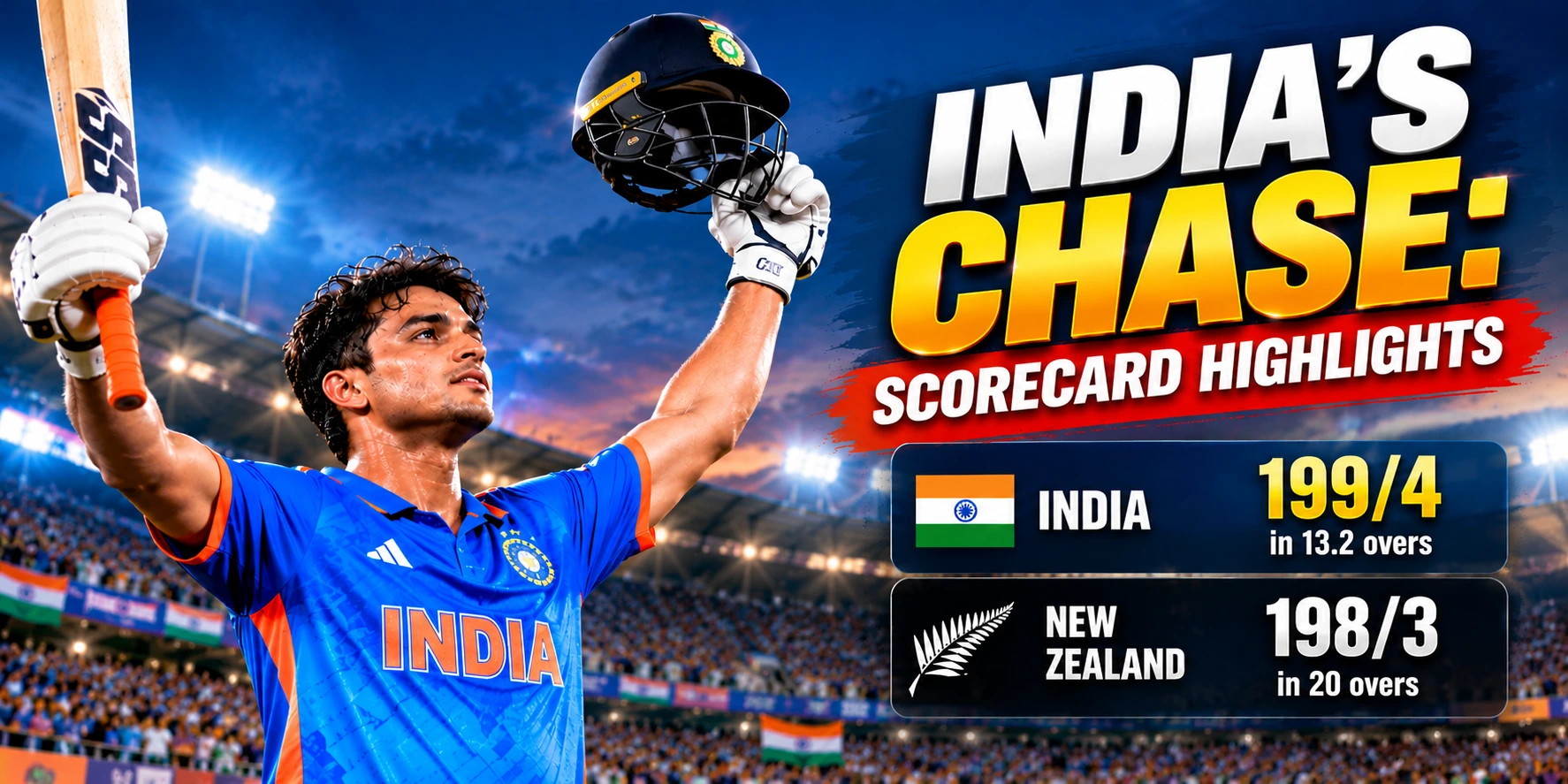
India needed 199 to win after New Zealand scored 198/3. Abhishek supplied the main scoring burst, while Vaibhav Sooryavanshi’s 45 from 19 balls gave India another fast contribution. The innings summary available in search results lists India at 199/4 after 13.2 overs, which means the target was reached with 40 legal balls unused.
| India batting highlight | Runs | Balls | What is verified |
|---|---|---|---|
| Abhishek Sharma | 113 | 38 | Highest individual score in the innings summary |
| Vaibhav Sooryavanshi | 45 | 19 | Fast-scoring supporting innings |
| India total | 199/4 | 13.2 overs | Target achieved |
| Other India batters | Not listed here | — | Full individual figures require the complete scorecard |
The two confirmed individual scores account for 158 of India’s 199 runs. The remaining 41 runs came from other batters and extras combined; without the full scorecard, it would be unsafe to assign that total to particular players or extras.
New Zealand’s Innings: 198/3

New Zealand made 198/3 in its allotted 20 overs. The accessible match summary lists Daryl Mitchell as unbeaten on 89 from 52 balls and Finn Allen on 40 from 25 balls. A separate match discussion lists Bevon Jacobs among the contributors, but his exact figures should be checked against the full scorecard before being used in a detailed batting table.
| New Zealand batting highlight | Runs | Balls | Scorecard detail |
|---|---|---|---|
| Daryl Mitchell | 89 not out | 52 | Listed in the available match summary |
| Finn Allen | 40 | 25 | Listed in the available match summary |
| Team total | 198/3 | 20 overs | Match summary total |
| Other batters and extras | Not fully reproduced | — | Use the complete scorecard for exact figures |
New Zealand’s 198/3 was a competitive T20 total, but India’s scoring pace made the chase short. Reaching 199 in 13.2 overs gave India a high run rate and a comfortable wicket margin. The result summary records a six-wicket win with 40 balls remaining.
Why 113 off 38 Balls Was So Important
A score of 113 from 38 deliveries is a high-impact T20 innings because it combines a large individual total with a very high scoring rate. Abhishek’s calculated strike rate of 297.37 indicates the speed at which India reduced the target. The innings allowed India to chase nearly 200 runs without needing to use the full 20 overs.
The context matters as much as the number. A century during a successful chase can reduce pressure on the middle order and force the bowling side to change plans early. It can also alter field placements because bowlers must defend boundaries while still trying to create wicket-taking opportunities. These are general tactical implications; specific shot-by-shot claims need ball-by-ball commentary.
How the Match Result Should Be Reported
Use the score and result in a consistent format: New Zealand 198/3 (20 overs); India 199/4 (13.2 overs); India won by six wickets, with 40 balls remaining. The available match summary identifies Abhishek Sharma as Player of the Match.
Also keep the format label clear. This was a T20 International in the India tour of New Zealand series, not an IPL match. The opponent, date, venue and team totals should appear consistently in the article title, introduction, tables, image alt text and meta description.
How Abhishek’s Innings Shaped the Chase
Chasing a target close to 200 can demand a fast start, but a rapid innings also needs control. Abhishek’s reported 113 from 38 balls gave India a major share of the runs in a short period. His contribution meant the required total became less intimidating as the chase progressed, while the other batters could focus on maintaining the scoring rate and avoiding a collapse.
The innings is notable for its combination of volume and speed. A batter can score quickly for a few overs without making a large total, or build a large score over a longer period. Reaching 113 in 38 deliveries combines both outcomes. The calculated strike rate of 297.37 is a concise way to describe that pace, although the number alone does not explain which shots were played or how the field was set.
It is also important to separate a match result from the details of the performance. The team score, overs used and winning margin describe the outcome. Balls faced and runs scored describe the individual innings. Boundary counts, dismissal method and partnerships add further context, but those details should be reported only when the full scorecard confirms them.
What the Scorecard Figures Mean
In cricket score notation, New Zealand’s 198/3 means the team scored 198 runs and lost three wickets in 20 overs. India’s 199/4 means India scored 199 runs and lost four wickets before the chase ended. The slash separates runs from wickets lost; it does not represent a fraction. These details help readers compare the innings without needing to watch the entire match.
The notation 13.2 overs means 13 completed overs plus two legal balls in the next over. It does not mean 13.2 decimal overs. Since a standard over contains six legal deliveries, India faced 80 legal balls in 13 overs and two additional balls, for 80 deliveries in total. A full 20-over innings contains 120 legal balls, so 40 balls remained when the target was reached.
A six-wicket victory means India had six wickets remaining when it completed the chase. This result description is different from winning by a certain number of runs, which applies when the team batting first wins. In this match summary, India batted second and passed the target, so the result is expressed in wickets and remaining balls.
Why a Fast Chase Puts Pressure on Bowlers
When a chasing team scores rapidly, the bowling side has fewer opportunities to use defensive plans over a long period. Captains may need to move fielders toward the boundary, change the bowling angle or bring on a different bowler sooner than planned. Every adjustment creates trade-offs: protecting one area can leave another area open, while a defensive field can make it easier for batters to take singles.
However, a high strike rate does not by itself reveal the exact tactical choices made in the match. To explain whether Abhishek targeted pace, spin, a particular side of the ground or a specific bowler, a writer should consult ball-by-ball commentary or a detailed innings report. Without that evidence, it is more accurate to discuss the general effect of a fast chase than to attribute particular shots or decisions to the players.
New Zealand’s total of 198/3 also matters to the story. It was a substantial score, yet India completed the chase with 40 legal balls remaining according to the available match summary. That combination makes the speed of the chase a central part of the result, not just the size of Abhishek’s individual score.
How to Read the Individual Contributions
Abhishek’s 113 and Vaibhav Sooryavanshi’s 45 from 19 balls are the two individual contributions specified in the available innings summary. Together, they account for 158 runs. The difference between that combined figure and India’s team total should not automatically be assigned to one named batter, because a team total can include contributions from other batters as well as extras.
Extras can include wides, no-balls, byes and leg-byes, depending on what occurred during the innings. They are recorded separately from a batter’s personal score. For that reason, subtracting two players’ scores from the team total does not establish the exact score of another player. A complete scorecard is needed to identify each batter’s runs, balls faced, dismissal, and the number of extras.
The same care applies to New Zealand’s innings. The available summary lists Daryl Mitchell on 89 not out from 52 balls and Finn Allen on 40 from 25. Those figures are useful highlights, but they do not provide a complete batting card. Other batters’ scores, extras, fall of wickets and bowling figures should not be filled in by estimation.
| Team | Player | Runs | Balls faced | Notable detail |
|---|---|---|---|---|
| India | Abhishek Sharma | 113 | 38 | Reported top score in the chase |
| India | Vaibhav Sooryavanshi | 45 | 19 | Fast-scoring supporting innings |
| New Zealand | Daryl Mitchell | 89* | 52 | Not out |
| New Zealand | Finn Allen | 40 | 25 | Contributed to New Zealand’s total |
Read these figures as selected highlights rather than a complete scorecard. The asterisk beside Mitchell’s score means he was not out when the innings ended. Runs and balls faced show the size and pace of a batter’s contribution, while the team total also reflects other batters and any extras.
What the Confirmed Figures Tell Readers
The strongest way to describe this match is to separate the confirmed result from details that still require a complete scorecard. The available summaries consistently report New Zealand at 198/3 in 20 overs and India at 199/4 after 13.2 overs. They also list Abhishek Sharma’s 113 from 38 balls and Vaibhav Sooryavanshi’s 45 from 19 balls. These details establish the scale and speed of the chase without needing to guess at boundary counts or dismissal descriptions, explore the latest cricket news and updates on KhelKhabri.
The strike-rate calculation is independently checkable: 113 divided by 38, multiplied by 100, gives 297.37 when rounded to two decimal places. The overs notation is also important. Thirteen overs contain 78 legal balls; the additional two balls make 80 legal deliveries faced by India. A full 20-over innings contains 120 legal balls, leaving 40 unused when India reached the target.
The scorecard should remain the final authority for every batter’s exact runs, balls faced, boundaries, dismissal method and partnership. Short match summaries are useful for the result and leading performers, but they may omit supporting statistics or display only selected players. If a figure is absent from the available source, leaving it out is more reliable than deriving it from the team total.
Why the Chase Stands Out
A successful chase of 199 in 13.2 overs is notable because the team reached the target with a substantial number of deliveries unused. The result is best expressed as a six-wicket win, with 40 balls remaining, rather than as a run-margin victory. Run margins describe a win by the team batting first; wicket margins describe a chase completed by the team batting second.
Abhishek’s reported innings was the main individual contribution in the available summary, while Sooryavanshi’s 45 from 19 balls was another important score. The two innings total 158 runs, but that arithmetic alone does not tell readers how the remaining runs were shared. Other batters, extras and the timing of dismissals must be taken from the full innings card. This distinction helps keep a match report informative without overstating what the source proves.
Frequently Asked Questions
Did Abhishek Sharma score 113 off 38 balls?
The match summary lists Abhishek Sharma at 113 from 38 balls in New Zealand vs India’s third T20I on 27 October 2026.
What was Abhishek Sharma’s strike rate?
His strike rate from 113 runs off 38 balls is 297.37, calculated by dividing 113 by 38 and multiplying by 100.
What was India’s total?
India scored 199/4 in 13.2 overs while chasing New Zealand’s 198/3 in 20 overs.
Who won the third T20I?
Available match summaries state that India won by six wickets, with 40 balls remaining.
Where was the match played?
The match was played in Wellington at Hnry Stadium, also described as Wellington Regional Stadium in some match summaries.
Conclusion
Abhishek Sharma’s 113 off 38 balls was the standout performance in India’s chase against New Zealand in the third T20I in Wellington on 27 October 2026. New Zealand made 198/3, and India reached 199/4 in 13.2 overs to win by six wickets with 40 balls remaining. Available summaries name Abhishek as Player of the Match.