


India Cricket · World Cup 2027 Analysis · Updated 5 November 2026
India have no shortage of bowling talent, but choosing the right combination remains a major challenge. The 2027 ODI World Cup will test their pace depth, spin plans, fitness management and ability to defend totals away from home.
The Indian bowling lineup is entering an important stage of its World Cup preparation. The latest ODI matches have shown both sides of the attack: a strong performance in Auckland and earlier problems against West Indies. India’s Indian bowling lineup has several talented options, but selectors must find the right balance between pace and spin.
Indian Bowling Lineup: A Promising Pool, Not a Finished Unit
India have tested established internationals alongside younger seamers. The wider pool gives selectors choices, but several roles remain open.
The New Zealand ODIs are an important test. Bumrah is not in the ODI squad, Prasidh Krishna was ruled out with a hamstring injury, and Auqib Nabi was added for the first three matches.
In Auckland, India bowled New Zealand out for 185 and won by five wickets under DLS. It was an encouraging result, but one match cannot settle the World Cup debate.
No 2027 World Cup squad has been announced. Fitness, form and upcoming ODIs can still change the pecking order.
The Current ODI Squad: Who Is in the World Cup Conversation?
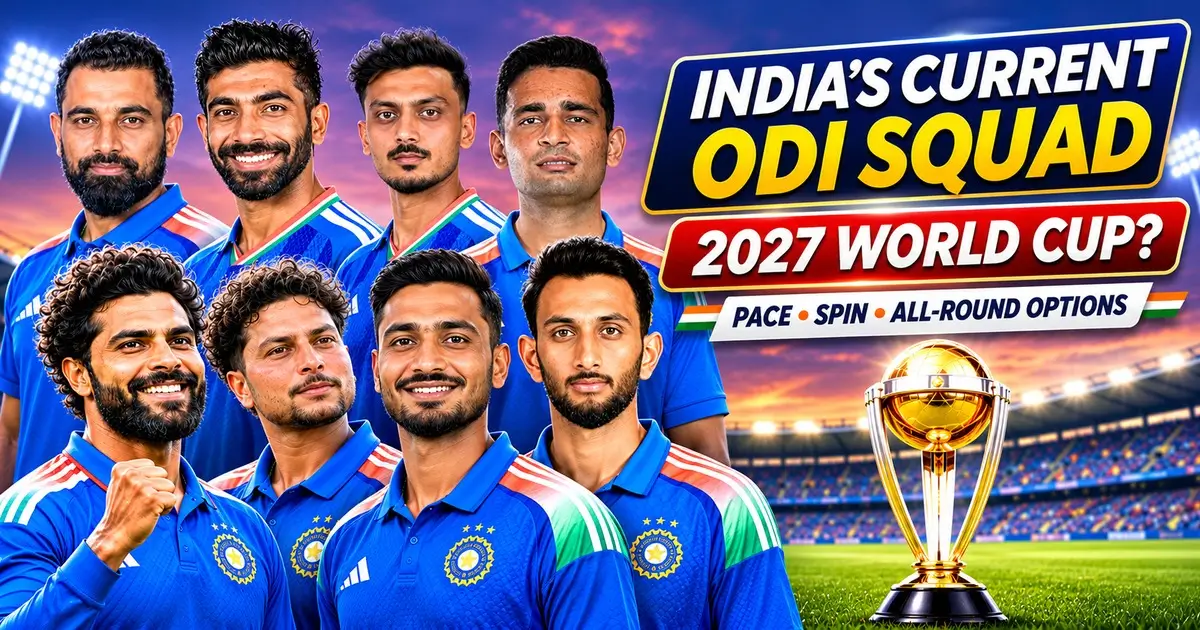
The recent selection announcements provide a useful snapshot of India’s options. The group includes experienced international bowlers, developing fast bowlers and players who can offer more than one skill. The table separates their possible value from any claim that they are certain World Cup selections.
| Bowler | Type or role | World Cup question |
|---|---|---|
| Jasprit Bumrah | Right-arm fast bowler | Can India manage his workload and have him available for the tournament? |
| Mohammed Siraj | Right-arm fast bowler | Can he lead the attack consistently across all conditions? |
| Arshdeep Singh | Left-arm fast bowler | Can he turn his white-ball skills into a dependable 50-over role? |
| Prasidh Krishna | Tall right-arm fast bowler | Can he return fully fit and build match rhythm? |
| Gurnoor Brar | Tall right-arm seamer | Can he develop control and repeat his best ODI spells? |
| Anshul Kamboj / Auqib Nabi | Seam-bowling options | Which player can offer wickets, control and lower-order value? |
| Kuldeep Yadav | Left-arm wrist-spinner | Can he remain India’s main middle-overs wicket-taker? |
| Axar Patel / Ravindra Jadeja | Left-arm spin all-rounders | Which balance of control, batting depth and wicket-taking will suit each venue? |
This is a discussion of players in the current selection picture or established candidates, not a predicted or confirmed 2027 World Cup squad. Bumrah was not named in the announced New Zealand ODI group; Prasidh was subsequently ruled out of that series.
The selection issue is not simply a contest for the last two places. ODI attacks need five specialist options plus part-time overs, and the balance must protect against injuries. A bowler who is effective only in one phase may be less useful than someone who can cover two roles. That is why India’s next selections should be judged by role coverage, not reputation or one impressive spell.
Middle-over plans need to account for aggressive batters who use footwork and sweeps to unsettle wrist-spin. KhelKhabri’s Daryl Mitchell vs Kuldeep Yadav ODI spin battle analysis shows why India need clear matchup plans, not just a list of bowlers.
Selectors need a first-choice group and reserves with defined powerplay, middle-over and death-over duties.
India’s Pace Attack: Bumrah, Siraj and the Search for Support
Jasprit Bumrah remains the most important pace option when fit and available for ODI selection. His control, yorkers, slower balls and ability to bowl at the start and end of an innings give India a rare tactical advantage. India must build a strong attack that does not depend on him for every difficult passage.
Mohammed Siraj offers experience and the ability to take the new ball. He can attack the outside edge and bowl long spells, but India need another seamer to share the hardest overs.
Arshdeep Singh brings a different angle
Arshdeep’s left-arm angle gives the attack variety against right-handed batters. He can swing the new ball and change the line of attack at the death. His four-wicket return in Auckland was a positive sign, although he conceded 70 runs in his ten overs. He must now pair wickets with better control.
Prasidh, Gurnoor and the new seam options
Prasidh’s height and hit-the-deck method could be useful on South African pitches, but his hamstring injury has interrupted the build-up. India should not rush him back simply because the World Cup is approaching. Match fitness and the ability to complete repeated spells matter more than a name on a shortlist.
Gurnoor Brar, Anshul Kamboj and Auqib Nabi give India options to assess. Brar’s three wickets in Auckland showed his capacity to strike, while Kamboj’s 2/22 from ten overs showed excellent control. Nabi went wicketless in that match, but he remains part of the wider group. The next challenge is repeating those performances against stronger batting attacks and on different surfaces.
India also need a seam-bowling all-rounder who can bat at No. 8 and bowl useful overs. Nitish Kumar Reddy is one option, but he must earn that role through regular ODI performances.
Spin Bowling: Kuldeep Leads a Stronger Competition
Spin looks like the most settled part of India’s bowling plan. Kuldeep Yadav offers wrist spin, changes of pace and the ability to take wickets when batters try to attack during the middle overs. His angles and variations can create doubts even when a pitch offers little turn.
Axar Patel offers control and batting depth, while Ravindra Jadeja brings experience and lower-order value. India may not need all three in every match; selection should suit the pitch and opposition.
Varun Chakravarthy may offer another option, but T20I success alone does not guarantee an ODI place. India must judge his 50-over control, fielding and ability to complete a full spell.
What the Recent ODI Results Tell Us
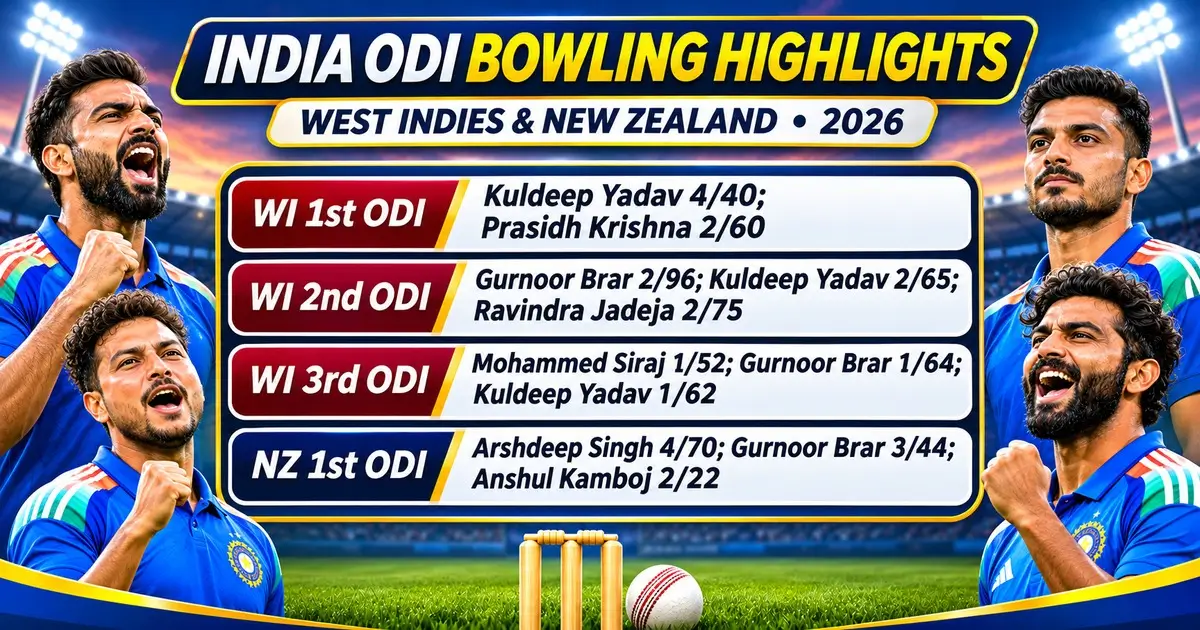
The three-match West Indies series in September and October exposed a clear weakness. India won the first two ODIs, but West Indies still posted 295/7 and 405/7. In the third match, India made 351/7 and lost after West Indies chased 352/5. The warning was India’s difficulty stopping large partnerships and defending a major total.
| Match | Opposition total | Notable India bowling | Result |
|---|---|---|---|
| West Indies 1st ODI 27 Sep 2026 | 295/7 | Kuldeep Yadav 4/40; Prasidh Krishna 2/60 | India won by 8 wickets |
| West Indies 2nd ODI 30 Sep 2026 | 405/7 | Gurnoor Brar 2/96; Kuldeep Yadav 2/65; Ravindra Jadeja 2/75 | India won by 8 wickets |
| West Indies 3rd ODI 3 Oct 2026 | 352/5 | Mohammed Siraj 1/52; Gurnoor Brar 1/64; Kuldeep Yadav 1/62 | West Indies won by 5 wickets |
| New Zealand 1st ODI 4 Nov 2026 | 185 all out | Arshdeep Singh 4/70; Gurnoor Brar 3/44; Anshul Kamboj 2/22 | India won by 5 wickets (DLS) |
West Indies totals against India: September–October 2026
Runs scored by West Indies in each match. Bars use a 405-run maximum; figures are match totals, not bowling averages.
The Auckland performance offered a response. India dismissed New Zealand for 185, with three seamers taking nine wickets between them. Kamboj was particularly economical, while Brar and Arshdeep supplied breakthroughs. The attack showed that it can work as a group, even without Bumrah in the ODI XI.
However, the Auckland scorecard should be read with care. Arshdeep took four wickets but conceded seven runs per over. Nabi bowled six overs for 33 runs without a wicket, while Axar gave away only 12 runs in five overs. India must still prove they can deliver the same control when opponents reach 300 or more.
What South Africa, Zimbabwe and Namibia Will Demand
The 2027 World Cup will be staged across South Africa, Zimbabwe and Namibia from 2 October to 21 November. The 14-team event is scheduled across 12 venues. India are placed in Group A with Australia, Pakistan, Afghanistan, Zimbabwe and one qualifier, and their first group match is against Australia in Cape Town on 7 October.
South African conditions can offer pace, bounce and carry, which may suit tall seamers who hit a hard length. Prasidh and Gurnoor are worth monitoring, but India cannot select for one pitch type. Zimbabwe and Namibia add different grounds and conditions.
India need seamers who can swing the new ball, attack with a hard length and execute slower balls or yorkers late in the innings. Spinners must be able to bowl into the pitch, vary flight and protect boundaries when there is little turn. The best attack will be flexible rather than built around a single home-condition template.
The ODI ball rule also makes the final 16 overs important. Teams use two new balls for the first 34 overs, then choose one of those balls for the remaining overs. Bowlers must learn to use an older ball and control the final overs without relying only on new-ball movement.
The Five Questions India Must Answer Before 2027
India still have time to settle the attack. Remaining ODIs should test combinations under pressure, not become rotation without clear selection goals.
- Who partners Bumrah? India need a trusted second seamer who can take wickets with the new ball and return for difficult overs at the end.
- Who is the reserve quick? The team must identify at least two backups who can step in without a major change to the bowling plan.
- Who bowls at No. 8? A genuine pace-bowling all-rounder would give the XI better balance and reduce pressure on the specialist bowlers.
- Which spinners play together? Kuldeep, Axar and Jadeja offer different strengths. India need a venue-based combination instead of selecting by reputation alone.
- Can the attack defend 300-plus totals? Recent high-scoring matches show why India must improve partnership-breaking plans, old-ball bowling and death-over execution.
The next home ODI assignments can provide valuable evidence. The BCCI’s published 2026–27 home schedule includes three ODIs against Sri Lanka in December 2026 and three against Zimbabwe in January 2027. Those matches can test reserves and build role clarity.
Selectors should avoid rushing a final choice. Bowlers need repeated chances in the powerplay, middle overs and death to be judged in defined roles.
Frequently Asked Questions
1. Is India’s bowling lineup ready for the 2027 ODI World Cup?
India have strong options, but the attack is not fully settled. Pace-bowling depth, fitness and death-over roles still need attention before the tournament.
2. Who could lead India’s pace attack in 2027?
Jasprit Bumrah is the leading candidate when fit and available. Mohammed Siraj is an experienced partner, while Arshdeep Singh and other quicks are competing for supporting roles.
3. Is Kuldeep Yadav likely to be important in the World Cup?
Yes, Kuldeep offers India a specialist wrist-spin option and a strong middle-over wicket-taking threat. His final role will depend on form, conditions and the balance of the XI.
4. Why is Prasidh Krishna’s fitness important?
Prasidh offers height and bounce, qualities that could be useful in South Africa. He was ruled out of the New Zealand ODI series with a hamstring injury, so his return and match workload need monitoring.
5. Where will the 2027 ODI World Cup be played?
South Africa, Zimbabwe and Namibia will co-host the tournament. The event is scheduled from 2 October to 21 November 2027, with matches across 12 venues.
6. What is India’s biggest bowling concern before the World Cup?
The biggest concern is pace depth and role clarity when Bumrah is unavailable. India also need reliable death bowling and a seam-bowling all-rounder who can strengthen the lower order.
Final Verdict: India Have Potential, But Need Proof
Building a balanced Indian bowling lineup will be one of the biggest tasks before the 2027 ODI World Cup. India have the quality to build a World Cup-winning attack, but still need a settled structure. Bumrah’s fitness, support for Siraj and the progress of young seamers will shape the pace unit. Kuldeep gives spin a strong foundation.
Auckland was a positive step, while the West Indies series warned against taking bowling depth for granted. India should use every ODI before October 2027 to build clear roles and reliable backups. The talent is there; now it needs to become a repeatable team performance.