

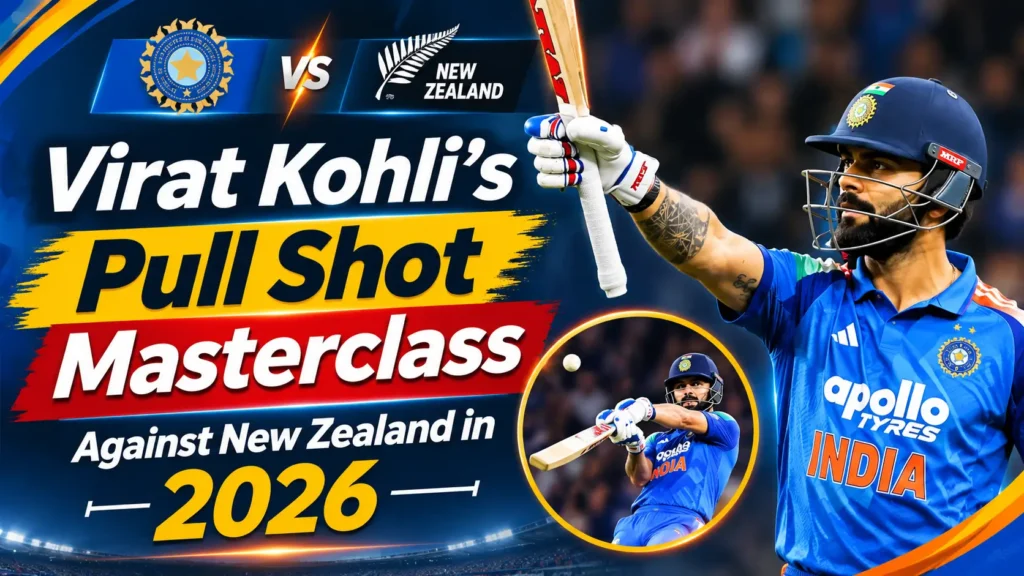
Virat Kohli’s 2026 Pull Shot Masterclass: Match Context
The first ODI was played under dark skies at Eden Park, a ground better known for its short boundaries than for easy batting. India won the toss and sent New Zealand in. The home side struggled against India’s seamers and finished on 185 all out in 40.2 overs. Tim Seifert made 38, Glenn Phillips scored 30, and Blair Tickner’s late 34 helped push the total beyond 180.
India’s bowlers had already shaped the contest. Arshdeep Singh claimed four wickets, Gurnoor Brar took three, and Anshul Kamboj returned the remarkable figures of 2/22 from ten overs. Kamboj was named Player of the Match. India’s chase looked manageable on paper, but the Eden Park pitch had awkward bounce and the weather kept breaking the players’ rhythm.
| Match detail | Verified result |
|---|---|
| Fixture | New Zealand vs India, 1st ODI, 4 November 2026 |
| Venue | Eden Park, Auckland |
| New Zealand | 185 all out (40.2 overs) |
| India | 143/5 (22.4 overs) |
| Revised target | 143 in 32 overs after rain |
| Result | India won by five wickets (DLS) |
| Player of the Match | Anshul Kamboj (2/22) |
Rohit Sharma fell for a six-ball duck in the first over, leaving India 1/1. That brought Kohli to the crease early. Instead of forcing every delivery away, he built the chase with Shubman Gill, who made 37 from 56 balls. Their 113-run second-wicket partnership took much of the pressure off India’s remaining batters.
How the Virat Kohli Pull Shot Changed the Chase
First, he worked with the bounce
Early in the innings, Kohli relied on familiar shots through square leg, mid-wicket and the off side. He did not begin with an endless series of pulls. The ball was sometimes holding up, and a mistimed cross-batted stroke could have gone straight to a fielder. His first job was to settle, find the pace of the surface and keep Gill involved.
As the partnership grew, New Zealand tried a shorter length. This was a logical plan on a pitch offering extra bounce, especially against batters who wanted to drive. Kohli answered by getting into position early, keeping his head steady and deciding whether the ball could be hit safely. His response was not one fixed shot but a set of choices.
Then came the swivel pull against Jamieson
At 12.5 overs, Kyle Jamieson dug the ball in on the stumps. Kohli moved back, rotated his body and sent the ball over mid-wicket for four. It was a classic swivel pull: balanced feet, a compact movement and a bat path that met the ball in front of his body. The shot mattered because it turned a testing length into a scoring chance.
The next over brought a different challenge. Blair Tickner produced steep bounce outside off stump, and Kohli did not try to pull every ball. At 13.1 he stood tall and lifted a rising delivery over extra cover for three. The decision was important. The same short length can demand a very different stroke when its line changes.
Key Deliveries That Defined Kohli’s Pull-Shot Display
The most revealing passage came across the 13th, 14th and 16th overs of India’s chase. These were not random boundaries. Together, they showed how Kohli judged length, adjusted to height and punished bowling that repeatedly entered his scoring zone.
| Ball | Bowler | Outcome | Why it stood out |
|---|---|---|---|
| 12.5 | Kyle Jamieson | Four | Controlled swivel pull over mid-wicket |
| 13.6 | Blair Tickner | Six | Short ball pulled powerfully over mid-wicket |
| 15.1 | Blair Tickner | Four | Pull brought up Kohli’s 50 from 35 balls |
| 15.5 | Blair Tickner | Four | Firm pull through mid-wicket |
| 15.6 | Blair Tickner | Four | Higher bounce guided to backward square leg |
| 19.4 | Jacob Duffy | Wicket | Pull caught by Tim Seifert at deep backward square leg |
The six off Tickner at 13.6 was the clearest statement. Kohli picked up a short ball, swivelled and cleared the mid-wicket boundary. It was his only six of the innings, yet it shaped the whole display. When Tickner returned in the 16th over, Kohli added three pull-shot fours from the same over, reaching his 80th ODI half-century in the process.
The shot at 15.6 also showed his adaptability. It climbed more than the earlier deliveries, but he stayed with the bounce and found the area behind square. The lesson was not simply to hit harder. It was to change the contact point and direction while staying balanced.
What Made the Pull Shot So Effective?

Balance came before power
A strong pull begins before the bat swings. The batter must judge the length quickly, establish a stable base and avoid letting the head fall towards the leg side. Kohli’s best shots came when his body moved into position early. That gave him space to rotate through the stroke without making it look rushed.
This is especially useful against a tall bowler such as Jamieson. Extra bounce can make the bat arrive below the ball or cause a top edge. Kohli’s answer was to stay upright and meet the ball with his eyes level. His position helped him hit a four from a delivery that might have forced another batter into a defensive shot.
He chose the right area of the field
Pulling in front of square and pulling behind square are not identical actions. A flatter, earlier contact can send the ball through mid-wicket. Later contact, or a ball that climbs higher, may travel towards backward square leg. Kohli showed both options against Tickner instead of trying to hit everything to one boundary.
That choice has been part of his thinking for years. In a BCCI interview about handling the short ball published in January 2014, Kohli explained the value of balance, fitness and committing to the shot. He also discussed why he often preferred pulling in front of square rather than hooking behind it. The Auckland innings gave fans a fresh example of those ideas in action.
He did not confuse attacking with swinging wildly
Not every short ball deserves a pull. Kohli left a high bouncer from Tickner at 13.5 and used an off-side stroke when another delivery climbed outside off. That restraint was as important as the big hits. A masterclass is not only about successful shots; it is about knowing when the percentages are against you.
Virat Kohli vs New Zealand Bowlers: The Numbers
Kohli’s final 74 contained 13 fours and one six. His boundary shots produced 58 runs, while the remaining 16 came from running between the wickets. That balance reflected an innings built on repeated scoring opportunities rather than one long burst of six-hitting.
| New Zealand bowler | Balls faced | Runs scored | Fours | Sixes |
|---|---|---|---|---|
| Blair Tickner | 14 | 27 | 4 | 1 |
| Jacob Duffy | 16 | 25 | 5 | 0 |
| Kyle Jamieson | 17 | 21 | 4 | 0 |
| Nathan Smith | 4 | 1 | 0 | 0 |
| Total | 51 | 74 | 13 | 1 |
Tickner conceded 27 to Kohli from only 14 balls, a strike rate of about 193 in that individual contest. Duffy gave away 25 from 16, while Jamieson conceded 21 from 17. The figures show why the Tickner overs became the highlight reel, but they also show that Kohli found boundaries against more than one bowler.
Why Kohli Was Eventually Dismissed by a Pull
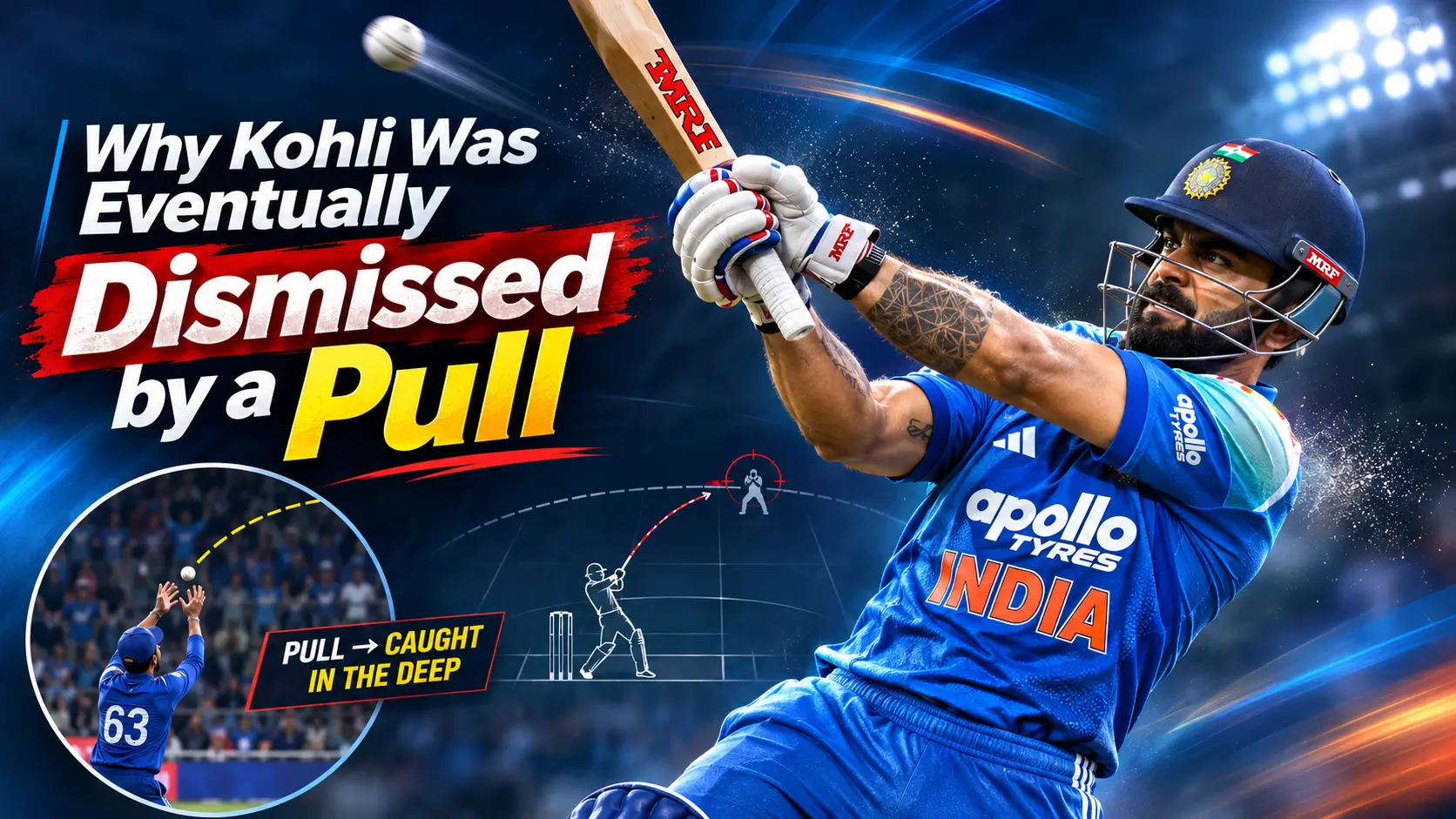
There was an important twist to the story. After reaching 74, Kohli tried to pull Jacob Duffy at 19.4 overs. This time he did not get enough control. The ball came off the lower part of the bat, and Tim Seifert held the catch at deep backward square leg. His innings ended with India on 124/3.
That dismissal does not erase the quality of the earlier shots. It makes the technical lesson clearer. The pull offers quick runs when the batter reads length and bounce correctly, but a small mistake in timing or contact can carry the ball to a catcher. Strong players manage that risk; they cannot remove it completely.
India briefly lost more wickets after Kohli departed. Axar Patel fell without scoring, and Shreyas Iyer was also dismissed as New Zealand found a short opening. But the target was already close. KL Rahul and Naman Dhir finished the chase, with India reaching 143/5 in 22.4 overs.
The Innings Was More Than a Batting Highlight
It is tempting to describe the match only through Kohli’s six and fours. The wider story matters. India’s seam attack restricted New Zealand to 185, despite a final-wicket stand that lifted the hosts from 146/9. Kamboj’s tight 2/22 spell and Arshdeep’s four wickets helped create a chase that India could control, even after the rain changed the target.
Kohli also contributed in the field. He took an excellent diving slip catch to remove Nathan Smith off Kamboj. His batting therefore followed an important moment in New Zealand’s innings. The official New Zealand Cricket match scorecard records both the catch and the final batting and bowling figures.
For India, the five-wicket result provided a 1–0 lead in the five-match ODI series. Supporters planning to follow the remaining fixtures can check the tour schedule and booking guidance in the India vs New Zealand match tickets guide. For Kohli, it was a timely display one day before his 38th birthday. His 80th ODI fifty showed that he could still move between careful accumulation and fierce attacking shots without losing the thread of a chase.
What Young Batters Can Learn From Kohli’s Pull Shot
The first lesson is to read the ball rather than decide on a shot in advance. Watch the length, then decide whether to leave, defend or pull. A ball that is short but too wide may be better played through the off side. A ball that rises near the body can demand another response altogether.
The second lesson is to make balance a habit. Kohli’s successful strokes were built on early movement and a steady head, not a huge backswing. Training should focus on picking up length, getting into position and making controlled contact. A safe pull starts with a stable body, and players should practise it with qualified coaching and appropriate protective equipment.
The final lesson is to understand the field. A pull towards mid-wicket can be a boundary when the gap is open, but it can also become a catch when a fielder waits in the deep. Kohli’s dismissal was a reminder to adjust the shot to the game situation. His knock was memorable precisely because it showed the rewards and risks together.
Final Word: A Masterclass With a Real Lesson
The Virat Kohli pull shot was one of the defining images of India’s first ODI win over New Zealand in 2026. His swivel pull against Jamieson, towering six off Tickner and three pull-shot fours in the 16th over turned difficult bounce into runs. His 74 from 51 balls made a revised chase far less intimidating.
Yet this was not a perfect innings, and it did not need to be. Kohli was eventually caught playing the same type of shot that had brought him so much success. That contrast is what makes the performance worth studying: technique creates opportunities, judgment manages risk, and even elite batters must keep adapting to the next delivery.
Frequently Asked Questions
How many runs did Virat Kohli score against New Zealand in the first ODI of 2026?
Kohli scored 74 from 51 balls at Eden Park on 4 November 2026. His innings included 13 fours and one six.
Which New Zealand bowler did Kohli hit for a pull-shot six?
He pulled Blair Tickner over mid-wicket for six at 13.6 overs. It was his only six of the innings.
How did Kohli reach his fifty in the Auckland ODI?
He reached his 80th ODI half-century in 35 balls, pulling Tickner for four at 15.1 overs.
Who dismissed Virat Kohli in the first ODI?
Jacob Duffy dismissed him for 74 at 19.4 overs. Tim Seifert caught the mistimed pull at deep backward square leg.
What was the revised target for India?
Rain changed India’s target to 143 runs from 32 overs. India made 143/5 in 22.4 overs to win by five wickets under the DLS method.
What makes Kohli’s pull-shot technique effective?
His early reading of length, stable balance and choice of contact point help him control short deliveries. He also knows when to leave the ball or use a different stroke.