

NZ vs IND 4th T20I 2026 | VENUE GUIDE
Will Auckland’s short boundaries favour attacking batters, or can swing bowlers such as Bhuvneshwar Kumar influence the powerplay?
30 October 2026 | 8:00 pm NZDT | Eden Park, Auckland
The fourth T20 international between New Zealand and India moves to Eden Park in Auckland on Friday, 30 October 2026. India have already secured the five-match series, but conditions at Auckland’s famous rectangular ground could create an unpredictable contest. The key questions are straightforward: Is Eden Park batting-friendly? Will the new ball swing? What does the weather forecast say? Where are the best seats, and can fans still buy tickets?
This detailed Eden Park pitch report answers those questions, examines India’s explosive batting order, assesses the likely bowling match-ups and explains the ticket situation using information from New Zealand Cricket, Eden Park and match scorecards. All predictions are pre-match analysis, not confirmed team or pitch announcements.
| Eden Park quick facts | Value |
|---|---|
| Recent T20I first-innings average | 183 runs |
| Wickets taken by pace (sample) | 69% |
| Friday temperature range | 13–18°C |
| Standard match tickets | Sold out (27 October announcement) |
Eden Park often suits attacking T20 batting because of its boundaries. Early seam movement and the Auckland breeze can still reward accurate fast bowlers. A 180–190 first innings could be competitive; conditions on the day remain decisive.
NZ vs IND 4th T20I: Date, Start Time and Venue Details
| Match detail | Information |
|---|---|
| Fixture | New Zealand vs India, 4th T20I |
| Date | Friday, 30 October 2026 |
| Venue | Eden Park, Auckland, New Zealand |
| First ball (local) | 8:00 pm NZDT |
| Start time in India | 12:30 pm IST |
| Gates open | 6:30 pm NZDT |
| Series position | India 3–0 ahead after three T20Is |
| Ticket status | Sold out — announced 27 Oct |
New Zealand Cricket and the BCCI list Eden Park as the venue. The stadium’s official match page gives a 6:30 pm gate opening and 8:00 pm first ball. Arriving ahead of the evening crowd is especially sensible because the fixture is sold out.
Eden Park Pitch Report: Batting-Friendly or Bowling-Friendly?
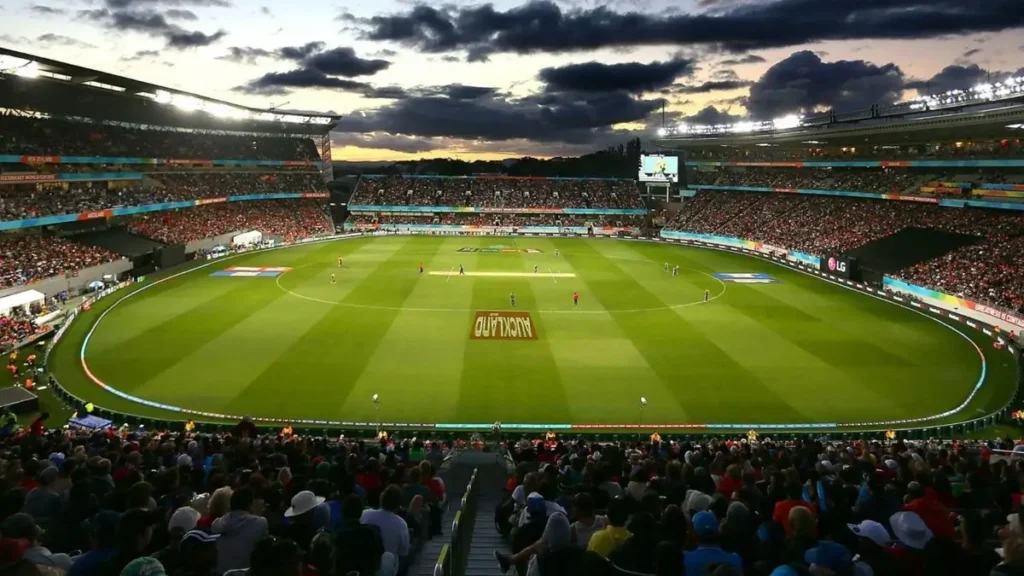
Eden Park is generally batting-friendly in T20 cricket, but it is not a flat pitch every evening. The ground’s shape produces unusually inviting boundary opportunities, particularly for straight hitting. Batters who settle quickly can convert slightly overpitched or short deliveries into boundaries. Yet a fresh surface, a stiff breeze and the new white ball can make the first few overs challenging.
Avenue for pace bowlers: attack the top of off stump, use hard lengths and vary speed once batters begin clearing the ropes. Avenue for batters: avoid forcing the ball against the wind, choose boundary angles carefully and attack predictable length bowling. Eden Park rewards both plans when executed well.
Is Eden Park a fast pitch?
The venue is better described as a potentially lively seam-and-bounce surface than an automatically fast or excessively green wicket. The actual pace of the surface will depend on the prepared strip and moisture on match day. A dry, firm wicket should allow confident stroke-making; a damp or grassier surface could give seamers more early assistance. Do not confuse a small playing area with the pitch itself being exceptionally fast.
Does the short boundary guarantee a high score?
No. Shorter boundaries make mishits more costly for bowlers, but early wickets and cross-winds can lower totals. Bowlers can protect the straight boundary by using pace changes, wider yorkers and defensive field placements, provided they do not become predictable. The match’s first six overs will reveal far more than a generic ‘batting paradise’ label.
Eden Park T20I Statistics: Average Score, Chasing Record and Bowling Trends
A recent-venue dataset of 13 T20 internationals from 2018 onwards, excluding rain-affected games, reports an average first-innings score of 183 and a second-innings average of approximately 172. The same sample gives a 46% win rate for teams batting first and 54% for teams chasing. Different sites publish different all-time figures because their datasets include different match dates and, sometimes, women’s games; these numbers refer to the specified recent sample rather than every T20 ever played here.
Selected 13-match sample since 2018, rain-affected matches excluded
Sample-based venue averages, not a prediction.
| Additional venue metric | Selected recent T20I sample |
|---|---|
| Sixes per match | 18.2 |
| Powerplay runs, first innings | 50.2 |
| Chasing wins | 54% |
Why do Cricbuzz’s Eden Park averages sometimes look different?
Cricket databases use varying periods and match classifications. The Eden Park venue profile at Cricbuzz shows broader T20 ground records, while this article’s charts use a more recent T20I-specific sample. Neither should be mistaken for an exact forecast of Friday’s pitch.
Pace vs Spin at Eden Park: Which Bowlers Could Succeed?
Recent venue figures assign 69% of wickets to pace bowling and 29% to spin; the remainder consists of other dismissals or rounding in the source. That makes pace particularly relevant here. Nevertheless, the figures represent wicket share, not a promise that every seamer will bowl economically.
Share of wickets in the same selected T20I sample
The 2% remainder reconciles rounded source shares.
Why pace bowlers can take wickets even in a high-scoring game
Batters are incentivised to target small boundaries, which raises the chances of catches on the rope. A bowler may concede runs but still take wickets through hard length, swing or slower-ball deception. India’s Arshdeep Singh, Bhuvneshwar Kumar and New Zealand’s Kyle Jamieson, Adam Milne and Jacob Duffy are therefore important tactical options, subject to selection.
Can Mitchell Santner and Axar Patel control the middle overs?
They can if they use pace changes and the boundary dimensions intelligently. Straight boundaries make full deliveries risky; a disciplined spinner who challenges batters to hit against the wind can still be valuable. Santner’s control was particularly evident in the third T20I, where his three overs cost just 17 runs despite India’s rapid chase.
Auckland Weather on 30 October 2026: Rain, Wind and Match Conditions
Latest forecast checked on 29 October: Auckland may see strong wind, temperatures about 13–18°C and afternoon showers. Around the 8:00 pm start, the hourly outlook is more favourable, with temperatures near 15–16°C and a low chance of rain. Weather forecasts change, so check the live forecast on match day.
| Weather factor | What to expect | Possible cricket impact |
|---|---|---|
| Temperature | About 15–16°C during the evening | Cool air; players may need a longer warm-up |
| Wind | Breezy to windy; local gusts possible | Important for aerial shots, high catches and bowling ends |
| Cloud cover | Variable | May coincide with useful seam conditions; does not guarantee swing |
| Rain | Possible showers, especially earlier | A delay or DLS calculation is possible only if rain affects play |
| Evening light | Floodlit cricket after sunset | Batters and fielders adjust to lights and ball visibility |
Weather guidance for readers: take a jacket and check MetService’s Auckland forecast again before leaving. Eden Park is not a fully roofed venue. Rain updates are time-sensitive and should be refreshed on match day.
What Happened in the First Three India vs New Zealand T20Is?
India’s 3–0 lead has come through three successful chases. In Christchurch, India chased down 226 and then 181; in Wellington, they completed a target of 199 in just 13.2 overs. The third game featured an explosive 113 from Abhishek Sharma, while Vaibhav Sooryavanshi also gave India an aggressive start.
India won all three matches while chasing
Scores shown as runs; wickets are listed in the table below.
| Match | New Zealand | India | Result |
|---|---|---|---|
| 22 Oct · 1st | 225/4 | 230/6 | India won by 4 wickets |
| 24 Oct · 2nd | 180/5 | 181/6 | India won by 4 wickets |
| 27 Oct · 3rd | 198/3 | 199/4 | India won by 6 wickets |
New Zealand’s main problem has been converting strong batting totals into victories. Eden Park’s scoring potential makes death bowling especially important: neither side can rely on a target of 180–190 being automatically safe.
Bhuvneshwar Kumar at Eden Park: Can Swing Bowling Rescue His Series?
Bhuvneshwar Kumar’s comeback has been expensive. In the first three matches he returned figures of 0/49, 1/50 and 0/40, delivering 12 overs for 139 runs and one wicket. His economy rate across those matches is approximately 11.58 runs per over. These are verified scorecard figures, not estimates.
Four overs in each of the first three T20Is
Overall: 12 overs, 139 runs, 1 wicket.
How Bhuvneshwar can help India in Auckland
His strength is not raw speed but control of seam position, swing and changing pace. At Eden Park, he could make a greater impact by bowling fuller early when movement exists, testing the batters’ outside edges and avoiding a predictable slot length. Once the ball loses movement, wide yorkers, cutters and careful field placement become essential.
If India use him in the powerplay, his opening spell against Tim Seifert and Finn Allen may decide whether New Zealand charge towards 60 without loss or spend their middle overs rebuilding. He dismissed Daryl Mitchell in the second T20I, showing that an early breakthrough is possible even during an otherwise costly spell.
Will Bhuvneshwar Kumar play the fourth T20I?
He played all three previous matches, making him a credible option again, but the fourth-match playing XI has not been confirmed. India may rotate their attack with the series decided. His selection should be updated only after the toss.
Bowlers Expected to Perform at Eden Park
Squad update (29 October): Lockie Ferguson has been ruled out of the remaining T20Is and Matt Fisher has replaced him. New Zealand Cricket also reported that Matt Henry is managing a quadriceps injury; he had been scheduled to sit out the remaining T20Is.
| Bowler | Why the venue may suit them | Main risk |
|---|---|---|
| Arshdeep Singh (IND) | Left-arm angle, new-ball movement and changes at the death | Full balls drifting into short boundaries |
| Bhuvneshwar Kumar (IND) | Early swing, accuracy and variations | Recent high economy rate; limited margin for error |
| Axar Patel (IND) | Changes of pace, tight lines to right-handers | A straight boundary that punishes overpitched spin |
| Jacob Duffy (NZ) | Seam movement, tight lines and changes of pace | Mistakes of length can disappear over the ropes |
| Matt Fisher (NZ) | Fresh seam option called into the squad for Ferguson | Selection and role are still unconfirmed |
| Mitchell Santner (NZ) | Control, game awareness and angle | India’s left-handers targeting match-ups |
These are players to watch, not a ranked prediction of wickets. The strongest opening spells will be those that combine a plan for the wind with good execution. If the pitch is damp, seamers become more attractive; if it is hard and dry, accuracy and cutters will matter more.
India’s Batting Line-Up: Who Could Exploit the Short Boundaries?
Abhishek Sharma is the headline form player following his 113 in Wellington. His ability to attack length early could make Eden Park’s straight boundary extremely inviting. But New Zealand may challenge him with hard lengths and bowling changes rather than feeding his hitting areas.
Vaibhav Sooryavanshi demonstrated his ability to accelerate with 45 off 19 in the third match. India’s approach with Abhishek and Vaibhav puts pressure on the opposition from the first over. Their batting tempo makes the powerplay a likely defining phase.
Sanju Samson provides a second scoring option and wicketkeeping depth. Captain Shreyas Iyer can play a stabilising role if early wickets fall, while Tilak Varma offers a left-handed middle-order option. Naman Dhir and Nitish Kumar Reddy add finishing power and useful all-round balance. The actual order may change depending on selection and the match situation.
India’s possible batting order
- Abhishek Sharma
- Vaibhav Sooryavanshi
- Sanju Samson (wicketkeeper)
- Shreyas Iyer (captain)
- Tilak Varma
- Nitish Kumar Reddy
- Naman Dhir
- Axar Patel
This is an illustrative batting order based on the players used in Wellington; it is not the confirmed order for Auckland. India could adjust the opening combination or rest players now that the series is secured.
Predicted Playing XIs for New Zealand vs India 4th T20I
| Team | Possible XI (unconfirmed) |
|---|---|
| India | Abhishek Sharma, Vaibhav Sooryavanshi, Sanju Samson (wk), Shreyas Iyer (c), Tilak Varma, Nitish Kumar Reddy, Naman Dhir, Axar Patel, Bhuvneshwar Kumar, Arshdeep Singh, Prince Yadav |
| New Zealand | Tim Seifert (wk), Finn Allen, Daryl Mitchell, Glenn Phillips, Bevon Jacobs, Michael Bracewell, Mitchell Santner (c), Adam Milne, Jacob Duffy, Zakary Foulkes, Matt Fisher (possible; unconfirmed) |
Selection note: These are possible combinations, not confirmed teams. Lockie Ferguson is unavailable. Fisher is a squad replacement rather than an automatic starter. India may rotate players with the series already won; the toss will confirm both XIs.
Toss Prediction: Should the Captain Bat or Bowl First at Eden Park?
The recent sample shows a narrow advantage to chasing teams, but not enough to make the toss decisive. Both captains should assess the used or fresh strip, grass coverage, wind direction and cloud conditions before choosing. If the evening surface has moisture, bowling first may offer early movement. If rain threatens later, chasing can also simplify planning. Conversely, a dry wicket with limited late moisture could reward a big total.
If conditions are green or cloudy, bowling first may appeal. Otherwise, the decision should be based on the actual strip and match-day wind. The chasing edge in the sample is modest.
New Zealand vs India 4th T20I Tickets 2026: Prices and Availability
New Zealand Cricket said on 27 October 2026 that the 4th T20I at Eden Park was sold out. Previously published ticket prices are historical advertised ranges, not current bookable offers.
Auckland’s event listing, carrying Ticketek information, advertised a ticket range of NZ$39.45–NZ$64.45. These were the published event prices, not a current quotation or guaranteed availability. Prices could vary with category, fees and ticket type; the listing does not clearly provide a reliable full seat-by-seat breakdown.
| Ticket question | Verified answer |
|---|---|
| Match ticket price range | NZ$39.45–NZ$64.45, previously advertised |
| Standard tickets available? | Officially sold out (27 Oct) |
| Bleed Blue Zone | Promoted fan area for India supporters; current availability not confirmed |
| Rooftop Walk extra | NZ$55 adult / NZ$30 child under 14, separate match ticket required |
| Official event and ticket updates | Eden Park fixture page |
Do not pay unofficial sellers without checking the event’s approved resale or transfer rules. Availability can change only if the official ticketing operator releases inventory or authorises another route. For full ticket-related search intent, this section can link internally to a dedicated stadium-ticket guide covering official sale dates, categories, transfer policies and refunds.
Eden Park Seating Plan: North, South, East and West Stands
The venue has four main stands around the ground: North, South, East and West. The seating experience for cricket depends on where the prepared wicket runs, your row height and the direction you prefer to watch a shot. Match-day block configurations can differ from a generic event map.
| Stand | Viewing notes |
|---|---|
| North | Good all-round perspective; confirm actual block and weather protection. |
| South | Broad venue view; covered sections may appeal in changeable weather. |
| East | Potentially strong square-of-wicket viewing angle; exposure to weather varies. |
| West | Another square-of-wicket perspective; check exact stand configuration. |
Best view recommendation: for analysing the batting and bowling, choose a medium-height position with a square-of-the-wicket perspective if available. For an elevated view of field settings, choose a higher central block. Families and rain-sensitive spectators should check covered rows in North or South stands. There is no universally best seat because personal preference and the actual pitch position vary.
Eden Park Entry Gates, Travel, Parking and Match-Day Tips

Eden Park is at 42 Reimers Avenue, Kingsland, Auckland. The official map shows gates around Walters Road, Cricket Avenue, Reimers Avenue and nearby access points. Use your ticket’s nominated gate rather than relying on a general stand description.
- Gates open at 6:30 pm: download the ticket before arrival and leave enough time for security checks.
- Public transport: Auckland Transport confirms that travel by bus and train is included with a match ticket from 4:30 pm until the end of daily services.
- Train option: Kingsland Station is close to the stadium. Additional late-night trains are planned after the fixture.
- Parking: no public stadium parking; local streets have restrictions and closures.
- Payment: Eden Park is cashless, so bring a bank card or contactless payment option.
- Weather: carry a warm layer; the ground is not fully roofed.
What to Expect From the 4th T20I: Key Battles and Match Scenarios
1. New Zealand’s powerplay versus India’s swing and left-arm pace
Finn Allen and Tim Seifert are capable of rapid starts. If Bhuvneshwar or Arshdeep can claim an early wicket, India may stop New Zealand from dictating the rate during the first six overs. If both openers survive, the ground’s boundaries make a flying start possible.
2. Abhishek Sharma and Vaibhav Sooryavanshi versus the new ball
India’s opening aggression has transformed their recent chases. New Zealand should avoid predictable pace on the bat; a mix of fuller lines, change-ups and tactical field placements could challenge the openers.
3. Mitchell Santner’s middle overs
Santner must find a way to reduce boundary frequency rather than merely hunt for wickets. His control in Wellington was encouraging even though India won emphatically.
4. Bhuvneshwar’s response to an expensive three-match run
His figures create an obvious storyline. A controlled opening spell would help India and provide evidence that experience and swing still have a place in these conditions. If he misses his length, Eden Park can be unforgiving.
5. The pressure on New Zealand to avoid a 4–0 deficit
The hosts have produced strong batting performances but have been unable to defend their totals. Better death-over execution and sharper boundary fielding are essential if they are to avoid another defeat.
NZ vs IND 4th T20I Prediction: Which Side Has the Advantage?
India enter as favourites on recent form after winning the first three matches. Their batting has shown the ability to chase both moderate and very large totals. Yet Eden Park’s conditions give New Zealand a credible route back into the contest, particularly if their seamers take early wickets and Mitchell Santner controls the middle overs.
| Match factor | Pre-match edge | Why |
|---|---|---|
| Current momentum | India | Three consecutive wins |
| Home-ground familiarity | New Zealand | Local conditions and crowd backing |
| Explosive top order | India | Abhishek and Vaibhav’s recent hitting |
| Seam opportunity | Both teams | Conditions and new-ball execution matter |
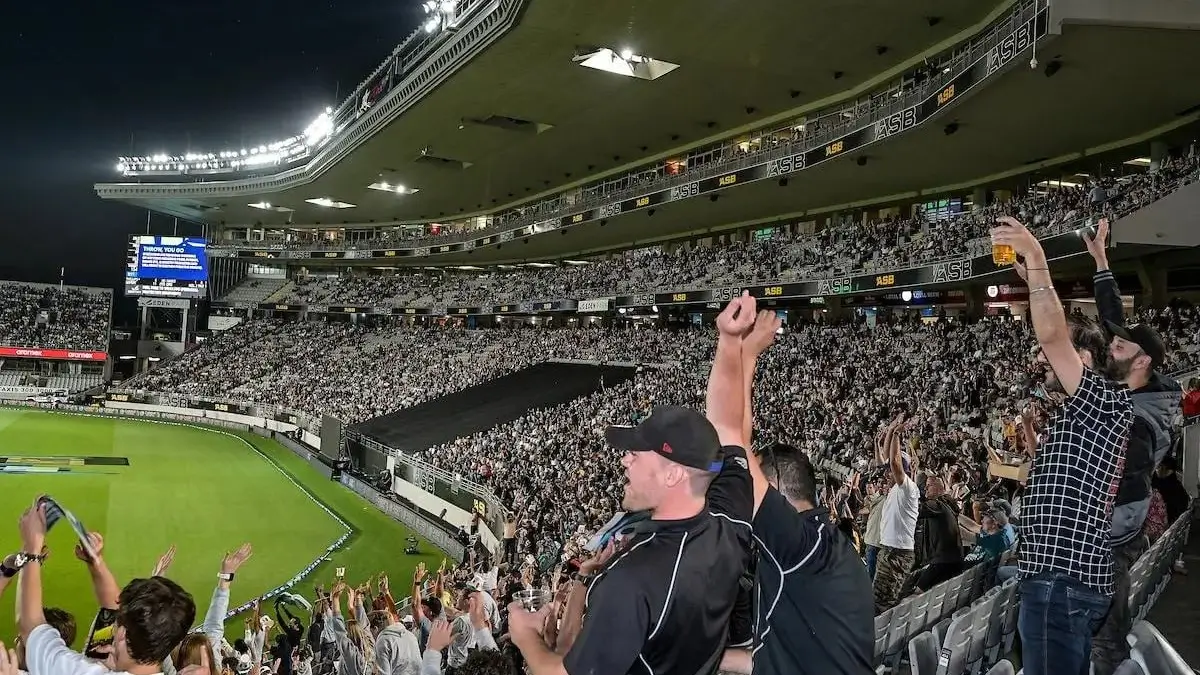
| Ticket atmosphere | High intensity | Official sell-out and nearly 40,000 expected |
Frequently Asked Questions: Eden Park Pitch, Weather and Tickets
Is Eden Park batting-friendly or bowling-friendly?
Usually batting-friendly in T20 cricket because of its boundaries, although seam and swing bowlers can find opportunities early. Recent first-innings T20I scores average around 183.
What is the average T20I score at Eden Park?
A selected recent sample of 13 T20Is, excluding rain-affected games, gives a first-innings average of approximately 183. Broader historical databases may show lower figures.
Is Eden Park a fast or slow pitch?
It can be firm and lively, with seam movement and bounce, but the match-day strip decides the actual pace. The ground’s short boundaries do not automatically make the pitch fast.
Will it rain during New Zealand vs India on 30 October 2026?
Forecasts suggest a risk of afternoon showers and windy conditions. The latest evening forecast looks more settled, but fans should check MetService immediately before the game.
What time does the fourth T20I start?
8:00 pm in Auckland on Friday, 30 October 2026, equivalent to 12:30 pm IST. Gates open at 6:30 pm local time.
How much are NZ vs IND Eden Park tickets?
A published event listing advertised NZ$39.45–NZ$64.45. New Zealand Cricket announced the match sold out on 27 October, so those figures are historical advertised prices, not proof of current ticket availability.
Which are the best seats at Eden Park for cricket?
Medium-height seats square of the wicket provide a classic cricket view. North or South Stand areas may offer more shelter; check the exact block and official seating map.
Can Bhuvneshwar Kumar succeed at Eden Park?
His ability to swing the new ball could help, but he has conceded 139 runs in 12 overs for one wicket in the first three matches. He needs accurate lengths and improved control.
Who is likely to open India’s batting?
Abhishek Sharma and Vaibhav Sooryavanshi opened in the previous match. The fourth-match line-up remains unconfirmed until the toss.
Is public transport included with a match ticket?
Yes. Auckland Transport says bus and train travel are included from 4:30 pm until the end of daily services for this event.
Final Eden Park Pitch and Match-Day Verdict
The Auckland fourth T20I brings together India’s outstanding batting momentum and a New Zealand side searching for a way to defend its totals. The pitch should allow fluent strokeplay if it is firm, but cool, windy conditions and a fresh white ball could make the opening overs more competitive than the short boundaries suggest.
For cricket followers, the three battles to watch are Abhishek Sharma against New Zealand’s opening seamers, Mitchell Santner’s middle-overs control, and Bhuvneshwar Kumar’s chance to improve his figures. For supporters planning to attend, the crucial practical facts are just as clear: the match begins at 8:00 pm, the gates open at 6:30 pm and ordinary tickets are officially sold out.
With almost 40,000 fans expected and India already 3–0 up, Eden Park could provide a memorable final chapter to the competitive portion of this T20I series.