

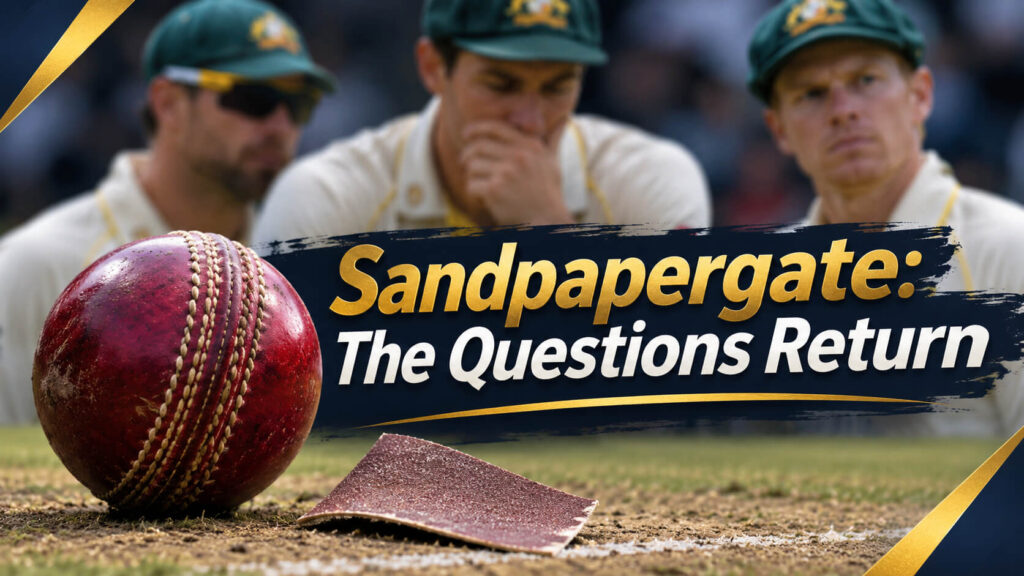
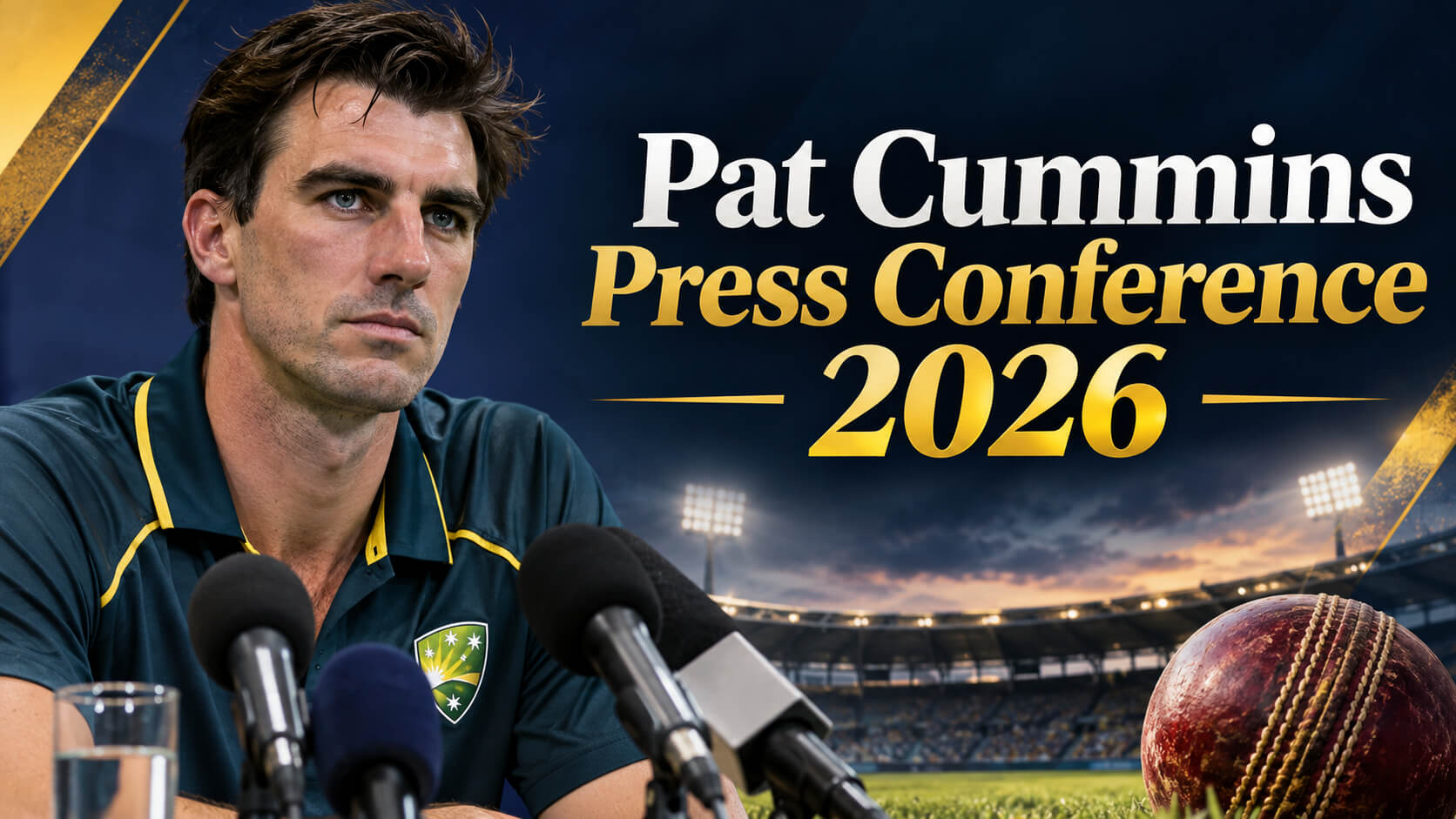
For almost 70 minutes on Friday, 13 November 2026, Cummins took questions about the incident that changed Australian cricket. He defended his account of what happened at Newlands eight and a half years earlier, challenged the implications of Khawaja’s memoir Sabr, and admitted that the culture surrounding the 2018 team had serious flaws.
The story is bigger than one press conference. It includes Cameron Bancroft’s appearance on television with sandpaper, Cricket Australia’s investigation and sanctions, Steve Smith’s tearful apology, Warner and Khawaja’s longstanding friendship, and the technical question of why reverse swing mattered so much. The central dispute is not whether ball tampering occurred—that is established—but how widely the illegal plan was known.
Key takeaways: what readers need to know
- Cummins denied advance knowledge of sandpaper being taken onto the field in the 2018 Cape Town Test.
- Khawaja’s memoir suggests awareness and responsibility extended beyond the three sanctioned players.
- Warner publicly backed Khawaja and criticised the original Cricket Australia investigation.
- Smith and Warner received 12-month suspensions; Bancroft was banned for nine months.
- Cricket Australia’s current leadership has not agreed to reopen the investigation.
- Competing accounts remain contested; no fresh investigation has established wider involvement.
Pat Cummins press conference 2026: The five Ws explained
| Question | Clear answer |
|---|---|
| Who? | Pat Cummins responded to allegations by former teammate Usman Khawaja. David Warner then publicly supported Khawaja. |
| What? | A fresh dispute about who knew of the illegal sandpaper plan behind Australia’s 2018 ball-tampering scandal. |
| When? | The media conference was on Friday, 13 November 2026. The original incident happened on 24 March 2018. |
| Where? | Cummins spoke at Cricket Central in Sydney; the original scandal took place at Newlands, Cape Town, South Africa. |
| Why? | Claims in Khawaja’s autobiography Sabr raised fresh questions about team knowledge and collective responsibility. |
| Whose responsibility? | The 2018 Cricket Australia findings sanctioned Smith, Warner and Bancroft. Any wider advance knowledge remains disputed. |
Sandpapergate evidence-status chart: What is confirmed and what is disputed?
As of 13 November 2026. Categories reflect the available reporting, not a new disciplinary finding.
Reading guide: An established event should not be confused with an allegation about another player’s knowledge.
What did Pat Cummins say at his 2026 press conference?
Cummins’ response was direct: he said he did not know sandpaper was being taken onto the field and rejected suggestions that he or other players had designed an organised illegal plan. One of his strongest responses to the idea that he had helped mastermind the scheme was: “That’s complete and utter nonsense.”
The comments were reported from the Sydney media conference. For further context, read ABC News’ coverage of Cummins’ response.
The Australian captain was particularly troubled by how he believed Khawaja’s account affected the reputations of people who had spent years rebuilding trust in the national side. He also expressed surprise that Khawaja said he had warned Bancroft to be careful, questioning why the act had not been stopped if that conversation had occurred as described.
Importantly, Cummins’ denial was specific. He rejected knowing about the illegal use of sandpaper, rather than claiming there had never been questionable behaviour around ball maintenance in cricket. He acknowledged that roughening old practice balls can be a training method to help batters prepare for reverse swing, but that practice is fundamentally different from using an abrasive object on a match ball.
Eight important points from the conference
- No advance knowledge: Cummins denied knowing sandpaper would be used on the field in Cape Town.
- No bowlers’ master plan: He denied any team meeting in which bowlers directed teammates to tamper with the match ball.
- Disagreement with Khawaja: He said the autobiography drew conclusions he believed were incorrect and harmful.
- Training versus matches: He explained why abrasive materials may be present in cricket training environments without legitimising their use in a match.
- Culture of the era: He acknowledged the Australian team had become too aggressive and confrontational in 2018.
- 2018 inquiry: He defended the investigation’s process but questioned the severity of the resulting sanctions.
- Personal cost: He said the renewed public controversy was painful for players and their families.
- Moving forward: He expressed the hope that answering reporters’ questions would allow the matter to recede.
What happened in the 2018 sandpaper incident at Cape Town?
The original controversy erupted on the third day of the third Australia–South Africa Test at Newlands on 24 March 2018. Television footage showed Australian opener Cameron Bancroft rubbing an object against the ball and later concealing it inside his trousers. The material was subsequently identified as sandpaper.
The incident was particularly damaging because it exposed an intentional attempt to change the ball’s condition in a way the laws of cricket do not permit. Ball maintenance is part of the game, but applying sandpaper or another artificial abrasive to a match ball crosses a clear line.
The immediate fallout included intense media scrutiny, pressure on captain Steve Smith and vice-captain David Warner, and an investigation conducted by Cricket Australia. The images of Bancroft attempting to hide the material became the defining visual record of what is widely known as Sandpapergate.
Why was sandpaper used? Reverse swing explained by a cricket expert
Reverse swing helps explain the cricketing motive behind the illegal attempt. With a sufficiently old ball, the combination of surface roughness, seam orientation, pace and atmospheric conditions can produce late sideways movement. For a batter, this movement can be difficult to read because the ball may behave differently from the swing anticipated at release.
Fast bowlers value reverse swing particularly on flatter surfaces and in long Test-match innings, when ordinary seam movement may be limited. Australia’s pace options during the South Africa tour included Mitchell Starc, Josh Hazlewood and Pat Cummins, with Nathan Lyon providing spin. The potential advantage to a bowling attack is obvious, but it is not proof of who knew about an illegal plan.
Legal ball maintenance versus illegal tampering
| Permitted activities | Prohibited activity |
|---|---|
| Polishing the ball using permitted methods under the playing conditions | Rubbing the match ball with sandpaper or another foreign abrasive |
| Cleaning mud with an umpire’s supervision when permitted | Deliberately scratching or damaging the ball’s surface |
| Using a worn practice ball to train batters against reverse swing | Changing the condition of the actual match ball with an artificial tool |
The key distinction is straightforward: teams may develop the skill of reverse swing, but cannot manufacture it by deliberately damaging a match ball with prohibited objects. Ball polishing and legal maintenance differ fundamentally from using sandpaper or another artificial abrasive.
What did Usman Khawaja reveal in his autobiography Sabr?
Khawaja’s newly published autobiography is the catalyst for the 2026 dispute. His account describes an Australian dressing-room environment in which generating reverse swing was a major priority. It alleges that the use of sandpaper was discussed and trialled earlier in the 2018 South Africa series, before Bancroft was caught at Cape Town.
According to Khawaja’s description, there was an episode involving a ball being roughened during the second Test at Port Elizabeth (now Gqeberha). He also wrote about a later plan involving the ball after a break in play and described warning Bancroft to be careful. Khawaja’s interpretation is that responsibility should not have been confined to the three sanctioned players.
Those details have prompted the difficult question at the heart of the dispute: does saying a team was collectively responsible mean every person knew the specific illegal action was about to occur? Cummins argues that the distinction is critical; Khawaja’s narrative suggests the broader context cannot be separated from what followed.
Reporting distinction: Khawaja’s memoir describes his recollections; it is not the conclusion of a reopened independent investigation. Assertions about the knowledge or intentions of individual players must remain clearly attributed and should not be stated as proven fact.
Cricket Australia’s 2018 investigation: Who was banned and why?
Cricket Australia conducted its disciplinary investigation after footage of Bancroft surfaced. It sanctioned three men: Smith, Warner and Bancroft. The governing body identified Warner as a key figure in the development of the scheme, Bancroft as the player who carried it out, and Smith as the captain whose failure of leadership allowed it to happen.
| Player | Role in 2018 | Cricket Australia sanction | Finding / consequence |
|---|---|---|---|
| Steve Smith | Test captain | 12 months | Held responsible for a serious failure of leadership |
| David Warner | Vice-captain | 12 months | Identified as centrally involved in developing the plan |
| Cameron Bancroft | Opening batter | 9 months | Carried out the illegal attempt caught on camera |
2018 Cricket Australia suspensions: Length of bans (months)
Horizontal bars show the length of each sanction imposed by Cricket Australia after the Cape Town incident.
Source: Cricket Australia’s 2018 disciplinary decisions. The graph represents suspensions, not match totals, bowling statistics, or a measure of guilt beyond the recorded sanctions.
The penalties were Cricket Australia sanctions, separate from disciplinary measures issued by international cricket authorities. Warner also lost eligibility for future Australian leadership under the sanctions announced at the time.
Was the investigation too quick?
Warner has described the inquiry as flawed and rushed. He argues that those sanctioned had limited opportunity to revisit the matter and that relevant information from other players may not have been fully explored. Cummins, who said he answered the questions put to him, has defended the process while arguing the punishments themselves were overly harsh.
These positions can both be recorded without claiming either is independently proved. An investigation may be criticised by participants without a fresh inquiry necessarily reaching a different conclusion. As of 13 November 2026, Cricket Australia’s leadership has not agreed to reopen the case.
Why did Steve Smith cry at his 2018 press conference?
On 29 March 2018, Smith returned to Australia and addressed the media in Sydney. The former Test captain appeared overwhelmed as he apologised for the damage to the game, admitted a serious lapse in judgment, and took responsibility for what happened under his leadership.
Smith’s tears became one of the defining images of the entire controversy. He was not simply dealing with a match penalty: he had lost the captaincy, received a lengthy suspension and faced intense public disappointment. During his apology, he spoke about the hurt experienced by his family and the responsibility cricketers carry as role models.
The moment matters in 2026 because it explains why players still describe the consequences of Sandpapergate in deeply personal terms. Smith eventually returned to international cricket and rebuilt his career, but the footage remains closely associated with the scandal.
David Warner and Usman Khawaja: How their childhood friendship shaped the reaction
Warner and Khawaja share more than Australian Test appearances. They have known each other since childhood and developed through the New South Wales cricket system. That longstanding association helps explain why Warner’s support for Khawaja immediately became a major part of the renewed controversy.
Warner has publicly backed Khawaja’s account and argued that the full story of the 2018 episode has not been acknowledged. For Warner, the fallout is not an abstract debate over cricket rules. He served a year-long suspension and says the consequences still affect his family and public reputation.
At the same time, friendship is not independent proof of the factual accuracy of an allegation. The significance of Warner’s position comes from his involvement in the original events and the direct challenge it poses to Cummins’ recollection.
David Warner vs Pat Cummins: Former teammates, opposing accounts
Warner and Cummins spent years playing for the same national side. Their different cricketing roles—Warner’s opening batting and Cummins’ fast bowling—were important parts of Australia’s Test success. They also shared the 2018 South Africa tour, which is now being publicly re-examined.
After Cummins’ Sydney press conference, Warner said he was disappointed and accused the captain of throwing Khawaja “under the bus”. Speaking on Fox Cricket coverage of the opening Australia–England ODI, he also repeated his criticism of the Cricket Australia inquiry.
Warner described the lasting personal impact of the scandal on himself, Smith and Bancroft. He also spoke about the miscarriage experienced by his wife Candice during that period, explaining why fresh discussion of the affair remains painful. His account deserves to be reported with care rather than turned into a claim about the motivations of other players.
| Question | Pat Cummins’ position | David Warner’s position |
|---|---|---|
| Did the wider team know? | Denies knowing sandpaper was to be used on the field | Supports Khawaja’s broader account |
| Was the 2018 inquiry adequate? | Defends the procedure he experienced | Says it was flawed and rushed |
| Were the sanctions fair? | Believes the bans were too severe | Emphasises their long-term personal consequences |
| How should Khawaja’s book be viewed? | Disputes its implications for him | Publicly backs Khawaja’s account |
ESPN Australia & New Zealand post: Original X coverage
ESPN Australia & New Zealand also covered the renewed debate online. Readers can view the original ESPN Australia & New Zealand post on X. The post is provided as a direct link instead of an embedded widget so that this article remains entirely free of images and third-party media.
What did Cummins say about the culture of the Australian team in 2018?
One of the most illuminating parts of the press conference went beyond whether sandpaper was used. Cummins acknowledged aspects of the Australian team’s culture in 2018 that he did not believe were acceptable, including excessive aggression and confrontational behaviour.
For readers interested in exploring more inspiring sports stories beyond cricket, Read more about Olympic and Paralympic sports here, including a detailed guide to para equestrian rules, athlete classifications, and competition scoring.
His argument was that an unhealthy atmosphere and a particular illegal act are not interchangeable concepts. A team could have tolerated behaviour that needed to change without every player knowing a specific plan was about to be carried out. Khawaja and Warner’s accounts challenge how far that distinction can reasonably be drawn in this case.
For cricket supporters, the distinction is important because good leadership involves more than simply avoiding direct participation in wrongdoing. Captains and senior players also influence what teammates consider acceptable. That is why the discussion has become one about team values as well as the technical laws of ball maintenance.
Did Pat Cummins discuss his wife Becky and the viral street video?
Yes. During the press conference, Cummins addressed footage of an animated conversation with his wife Becky that had circulated online. He rejected claims that they had been arguing with each other, saying she was frustrated by Khawaja’s allegations and the renewed public attention.
Cummins also criticised the intrusion into his family’s private life, describing cameras following him while he was out with his young daughter. The moment added a human dimension to a dispute already affecting professional relationships and reputations.
Sandpapergate timeline: From Cape Town in 2018 to Sydney in 2026
Reverse swing, on-field conduct and tension between the teams form the backdrop to the later scandal.
Television footage records his attempt to alter the match ball and conceal the abrasive material.
Smith and Warner receive 12-month suspensions; Bancroft receives nine months.
The former captain accepts responsibility for the failure of leadership during an emotional Sydney press conference.
The bowling group publicly says it did not know sandpaper had been brought onto the field.
His memoir challenges the prevailing understanding of how widely the behaviour was known.
The Australian captain rejects the allegation that he knew of or helped plan the use of sandpaper.
The former vice-captain backs Khawaja and criticises Cummins’ public comments and the original inquiry.
Cricket expert analysis: What is established, and what remains disputed?
Established fact: Bancroft was captured attempting to alter the ball with sandpaper in March 2018. Cricket Australia investigated and sanctioned Smith, Warner and Bancroft. Those disciplinary decisions are part of the public record.
Disputed claim: How many other players knew about the use or planned use of sandpaper, and at what point? Khawaja’s account describes broader knowledge and involvement; Cummins denies being aware of the illegal plan. Warner backs Khawaja, but those differing recollections do not establish a new official finding.
Analysis: This distinction is the key to fair reporting. Knowing that a side wants reverse swing is not the same as knowing a teammate will use an illegal object. Equally, a well-documented sporting scandal can raise legitimate questions about collective responsibility beyond the few people formally punished.
Another reason the debate persists is the difference between an investigation’s scope and the complete historical truth. A disciplinary inquiry establishes findings on available evidence; it does not necessarily record every conversation that happened in a dressing room. But absence of a public finding against someone must not be rewritten as proof of wrongdoing.
For Australian cricket, the long-term challenge is not only to settle arguments about the past but also to maintain trust in the standards expected of current players. The 2026 dispute shows how quickly a team’s reputation can become entangled with unresolved disagreements between former teammates.
Frequently asked questions about Pat Cummins and Sandpapergate
What did Pat Cummins say at his 2026 press conference?
He denied knowing that sandpaper would be used on the ball in the 2018 Cape Town Test and rejected claims that he helped organise the illegal plan.
When and where was the Pat Cummins press conference?
It was held on Friday, 13 November 2026, at Cricket Central in Sydney, Australia.
What is the Sandpapergate scandal?
Sandpapergate refers to Australia’s 2018 Test-match ball-tampering incident at Newlands, Cape Town, where Cameron Bancroft was filmed attempting to alter a cricket ball using sandpaper.
Why did Steve Smith cry at the 2018 press conference?
He was apologising for a leadership failure, the damage to Australian cricket and the personal consequences of the incident, including his suspension and impact on his family.
Who was banned for the 2018 ball-tampering incident?
Cricket Australia banned Steve Smith and David Warner for 12 months each, and Cameron Bancroft for nine months.
What does Usman Khawaja claim in Sabr?
His autobiography suggests that knowledge of practices around sandpaper and reverse swing extended beyond the three sanctioned players. The precise extent of wider knowledge is contested.
Are David Warner and Usman Khawaja childhood friends?
Yes. They have known one another since childhood and share a longstanding cricketing connection through New South Wales and Australia’s national side.
Did David Warner support Usman Khawaja?
Yes. Warner supported Khawaja’s version of events and criticised both Cummins’ response and the original Cricket Australia investigation.
Did Pat Cummins admit to ball tampering?
No. He denied knowledge of sandpaper being taken onto the field and denied helping plan the illegal action.
Will Cricket Australia reopen the inquiry?
As of 13 November 2026, Cricket Australia’s leadership has ruled out reopening the investigation.
Final verdict: Why the 2018 scandal still divides Australian cricket
Pat Cummins’ November 2026 press conference was intended to answer questions and move Australian cricket beyond an event that occurred more than eight years ago. Instead, it exposed a sharp disagreement among players who lived through the same tour.
His denial of knowing about the illegal plan is unambiguous. Khawaja’s memoir presents a broader account of the atmosphere and actions surrounding reverse swing, and Warner has lent that account public support. The historical sanctions remain clear, but the question of wider advance knowledge has not been resolved by a new investigation.
That is why Sandpapergate continues to matter. The debate is no longer only about one piece of sandpaper. It is about the responsibility of captains, the trust between teammates, the reliability of sporting investigations and whether lessons from a damaging episode can survive conflicting personal memories.